Introducing the Maine Coon
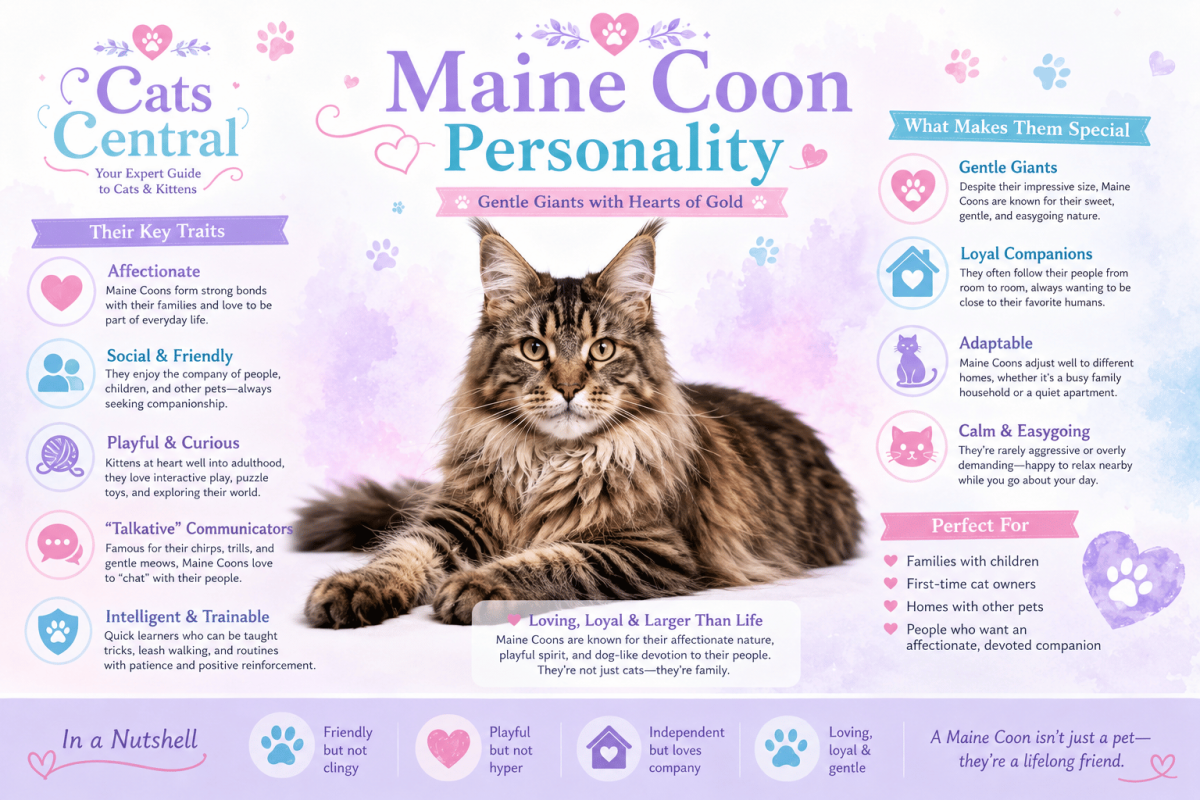
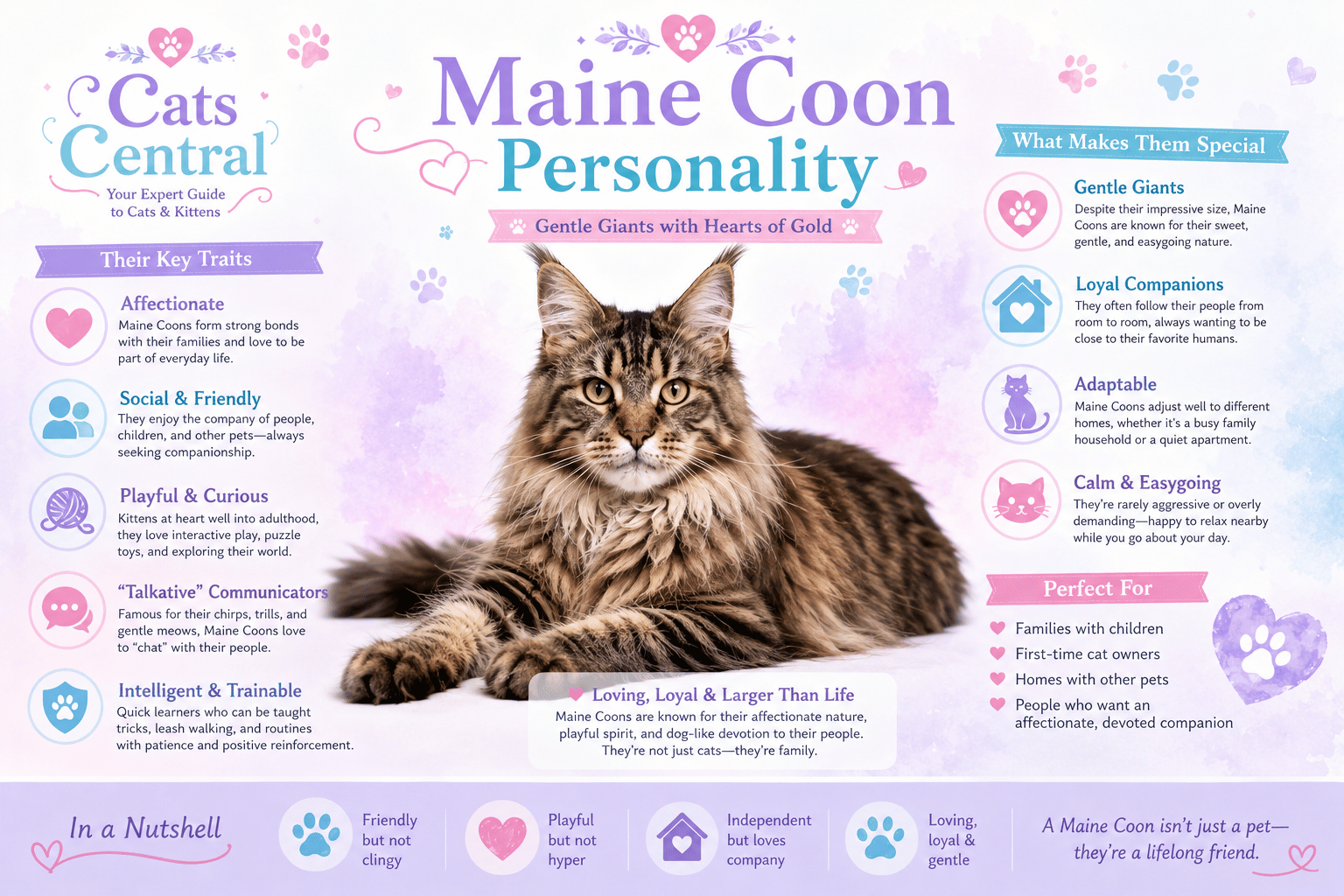
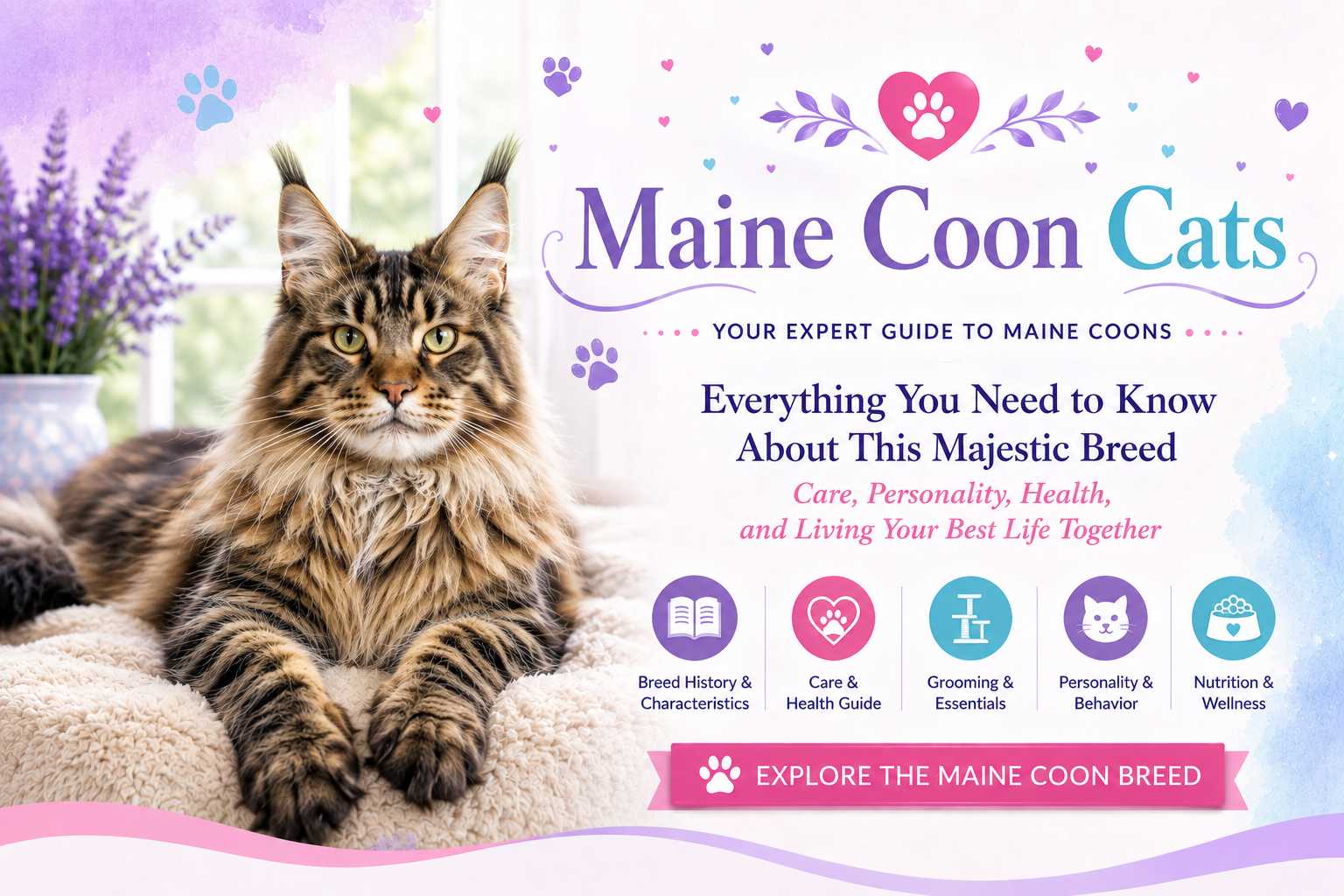
The Maine Coon is one of the world’s largest and most beloved domestic cat breeds. Famous for its impressive size, luxurious shaggy coat, bushy tail, and gentle personality, this magnificent cat has earned the nickname “the gentle giant of the cat world.” Despite its wild appearance, the Maine Coon is known for being affectionate, intelligent, and exceptionally good-natured.
Originally developed in the northeastern United States, the Maine Coon evolved to withstand harsh winters with its dense, water-resistant coat and sturdy build. Today, these adaptable cats are treasured family companions that typically get along well with children, other cats, and cat-friendly dogs. They are playful without being overly demanding, enjoy interactive games, and often remain kitten-like well into adulthood.
Whether you’re considering bringing home a Maine Coon kitten or simply want to learn more about this remarkable breed, this comprehensive Cats Central guide covers everything you need to know—from personality, size, health, grooming, nutrition, and training to choosing a responsible breeder and deciding whether a Maine Coon is the right companion for your home.
Cats Central Recommendation: If you’re looking for a large, affectionate, intelligent cat that enjoys being part of family life, the Maine Coon is difficult to beat. Their gentle temperament, playful nature, and adaptability make them excellent companions for many households. Just be prepared for regular grooming, a larger food budget, and plenty of love from one of the friendliest cats you’ll ever meet.
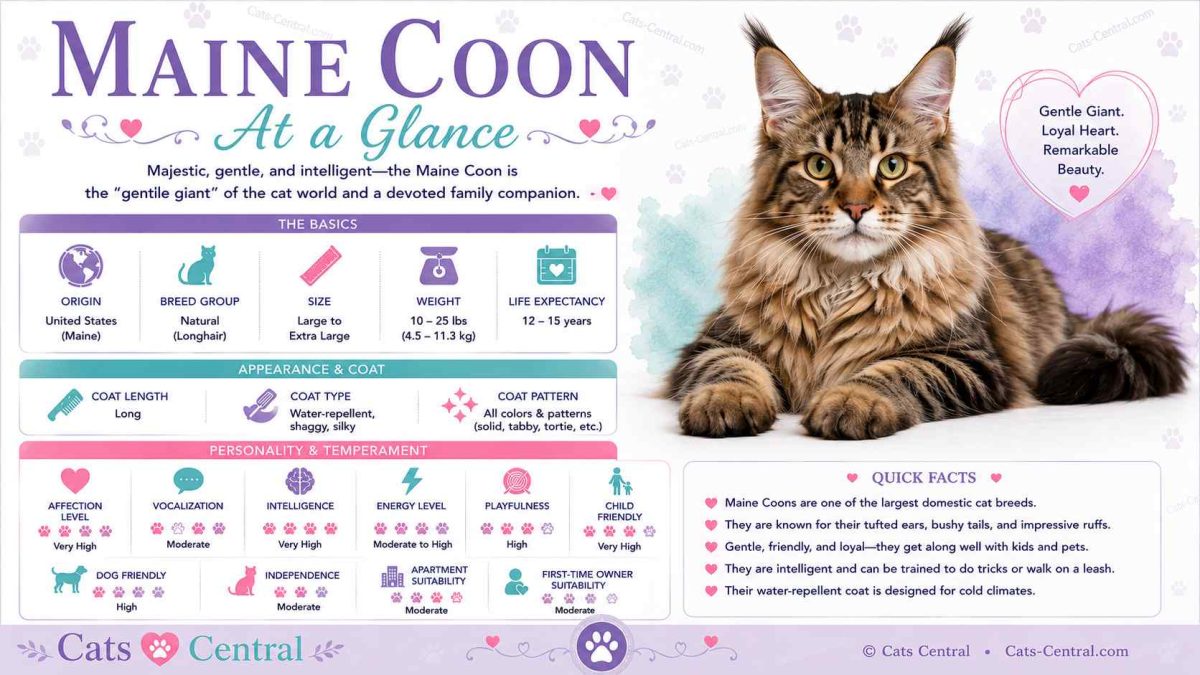
Maine Coon at a Glance
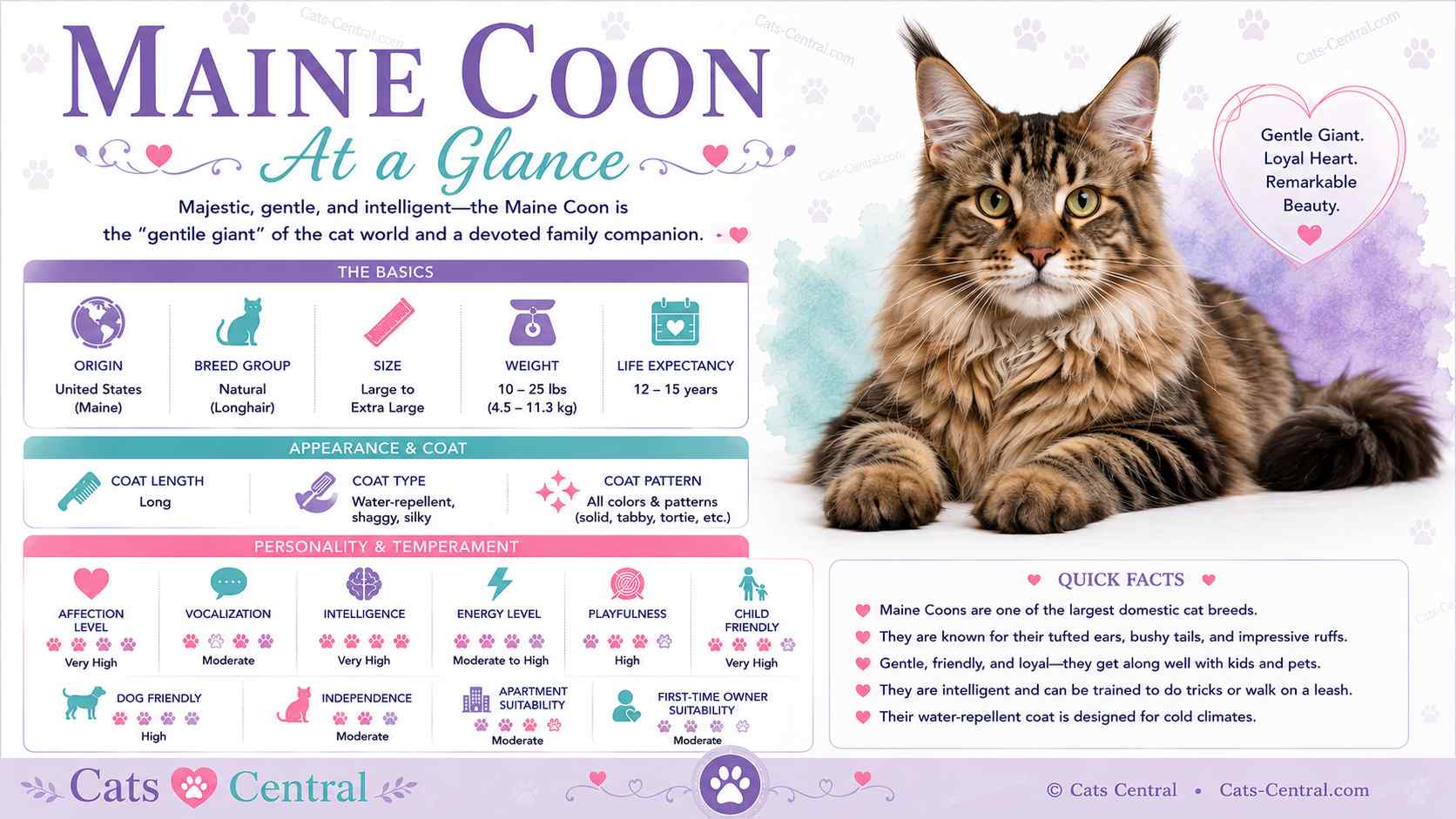
| Origin | United States (Maine) |
|---|
| Breed Group | Natural Breed |
|---|
| Size | Large to Giant |
|---|
| Weight | Females: 8–15 lb (3.6–6.8 kg)
Males: 13–18+ lb (5.9–8.2+ kg) |
|---|
| Lifespan | 12–15 years (often longer with excellent care) |
|---|
| Coat | Long, shaggy, water-resistant double coat |
|---|
| Shedding | Moderate to Heavy (seasonal) |
|---|
| Grooming Needs | Moderate to High |
|---|
| Temperament | Gentle, affectionate, intelligent, playful, sociable |
|---|
| Energy Level | Moderate |
|---|
| Vocalness | Moderate – known for chirps and trills rather than loud meows |
|---|
| Affection Level | High |
|---|
| Good With Children | Excellent |
|---|
| Good With Other Cats | Excellent |
|---|
| Good With Dogs | Usually Excellent with cat-friendly dogs |
|---|
| Apartment Friendly | Yes, provided there is enough space to climb and play |
|---|
| Trainability | High |
|---|
| First-Time Owner Friendly | Yes |
|---|
| Hypoallergenic | No |
|---|

Back to Page Menu
Quick Breed Snapshot
| Best For | Families, singles, seniors, and multi-pet households looking for a friendly, interactive companion |
|---|
| Not Ideal For | Owners wanting a low-maintenance cat or those unable to provide regular grooming and enrichment |
|---|
| Personality | Gentle, affectionate, intelligent, playful, confident, and sociable |
|---|
| Activity Level | Moderate – enjoys climbing, interactive play, and exploring without being hyperactive |
|---|
| Maintenance | Moderate to High – regular brushing, routine grooming, and quality nutrition are important |
|---|
| Space Requirements | Adaptable to apartments or large homes, but benefits from tall cat trees and plenty of vertical space |
|---|
| Experience Level | Suitable for both first-time and experienced cat owners |
|---|
| Cats Central Rating | ★★★★★ (5/5) – An exceptional family companion with an affectionate personality and striking appearance. |
|---|
Cats Central Tip: Maine Coons mature much more slowly than most cat breeds. While many cats reach full size by their first birthday, a Maine Coon may continue growing for three to five years. Feed a balanced, high-quality diet appropriate for its life stage, provide sturdy climbing furniture designed for larger cats, and don’t mistake its playful, kitten-like behavior for immaturity—it’s simply part of what makes this breed so endearing.
Back to Page Menu
Cats Central Report Card
| Category | Rating | Comments |
|---|
| Affection | ★★★★★ | Warm, loving companions that enjoy spending time with their families without being overly demanding. |
| Child Friendliness | ★★★★★ | Patient and gentle, making them one of the best cat breeds for respectful children. |
| Other Cats | ★★★★★ | Typically very sociable and accepting of other feline companions when introduced properly. |
| Dogs | ★★★★★ | Usually gets along extremely well with cat-friendly dogs thanks to its confident, easygoing nature. |
| Playfulness | ★★★★★ | Retains a playful, kitten-like personality well into adulthood and enjoys interactive games. |
| Intelligence | ★★★★★ | Highly intelligent and quick to learn routines, puzzle toys, and even simple tricks. |
| Trainability | ★★★★★ | Responds well to positive reinforcement and can often be taught to walk on a harness or play fetch. |
| Grooming Ease | ★★★☆☆ | Requires regular brushing to keep its long coat healthy and reduce tangles and shedding. |
| Health | ★★★★☆ | Generally robust, but responsible breeding and regular veterinary care are important due to some inherited health conditions. |
| Apartment Living | ★★★★☆ | Can thrive in apartments if given plenty of climbing opportunities, enrichment, and daily interaction. |
| First-Time Owners | ★★★★★ | An excellent choice for new cat owners willing to commit to routine grooming and quality care. |
| Overall | ★★★★★ | A magnificent all-around companion combining beauty, intelligence, and one of the friendliest personalities in the cat world. |
Back to Page Menu
About the Maine Coon
The Maine Coon is one of the oldest natural cat breeds in North America and is widely regarded as the official state cat of Maine. Renowned for its impressive size, luxurious coat, tufted ears, and magnificent bushy tail, the breed has captured the hearts of cat lovers around the world. Although their rugged appearance may resemble that of a wildcat, Maine Coons are famously gentle, affectionate, and devoted companions.
Often described as the “gentle giant” of the cat world, Maine Coons combine intelligence, curiosity, and an easygoing personality. They enjoy spending time with their families, following people from room to room, and taking part in daily activities without demanding constant attention. Many owners describe them as having dog-like qualities because they often greet visitors, learn tricks, play fetch, and happily accompany their owners around the home.
Unlike many highly vocal breeds, Maine Coons usually communicate with soft chirps, trills, and gentle meows. Their expressive personalities and friendly nature make them excellent companions for families with children, seniors, and homes with other pets. They are confident without being aggressive and generally adapt well to new environments when introduced gradually.
Maine Coons also mature more slowly than most domestic cats. While many breeds reach their full size by 12 to 18 months of age, a Maine Coon may continue developing for three to five years. During this time they retain much of their playful, kitten-like enthusiasm, making them entertaining companions throughout their early adulthood.
Today, the Maine Coon consistently ranks among the world’s most popular pedigree cats. Whether admired for their impressive appearance, affectionate personality, or remarkable intelligence, these gentle giants continue to earn their reputation as one of the finest family cats available.
Back to Page Menu
History and Origins of the Maine Coon
How the Breed Developed
The Maine Coon is one of North America’s oldest natural cat breeds, originating in the rugged state of Maine in the northeastern United States. While many colorful legends surround its beginnings—including tales of cats descended from raccoons or the pets of Marie Antoinette—modern genetics confirms that the breed developed naturally from long-haired cats brought to North America by European settlers and seafarers.
Over generations, these hardy cats adapted to Maine’s long, cold winters through natural selection. Their dense, water-resistant coats, large tufted paws that act like natural snowshoes, sturdy bodies, and long bushy tails all helped them survive harsh weather conditions. Farmers, sailors, and rural families valued these cats for their excellent hunting skills, intelligence, and friendly personalities, allowing the breed to flourish long before organized cat breeding became common.
Unlike many modern pedigree cats created through selective crossbreeding, the Maine Coon evolved largely on its own before breeders began preserving its distinctive characteristics. This natural development contributes to the breed’s robust appearance, adaptable temperament, and overall resilience.
Recognition by Cat Registries
Maine Coons became popular show cats during the late 1800s and appeared at some of North America’s earliest cat exhibitions. However, the breed’s popularity declined during the mid-20th century as imported long-haired breeds, particularly Persians, became fashionable. Dedicated breeders worked tirelessly to preserve the Maine Coon, and their efforts were rewarded as interest in the breed steadily grew once again.
Today, the Maine Coon is fully recognized by all major cat registries, including the Cat Fanciers’ Association (CFA), The International Cat Association (TICA), the Canadian Cat Association (CCA), and the Governing Council of the Cat Fancy (GCCF) in the United Kingdom. It consistently ranks among the most popular pedigree cat breeds worldwide thanks to its affectionate nature, impressive appearance, and adaptable personality.
Interesting Historical Facts
- The Maine Coon is the official state cat of Maine.
- It is one of the oldest natural cat breeds native to North America.
- The breed is affectionately known as the “Gentle Giant” because of its large size and exceptionally friendly temperament.
- Maine Coons often continue growing until they are three to five years old, much longer than most domestic cat breeds.
- Their distinctive chirps and trills are as well known as their appearance, with many owners saying their cats “talk” rather than meow.
- Several Maine Coons have held world records for extraordinary body length, helping cement the breed’s reputation as one of the largest domestic cats.
Back to Page Menu
Maine Coon Photo Gallery
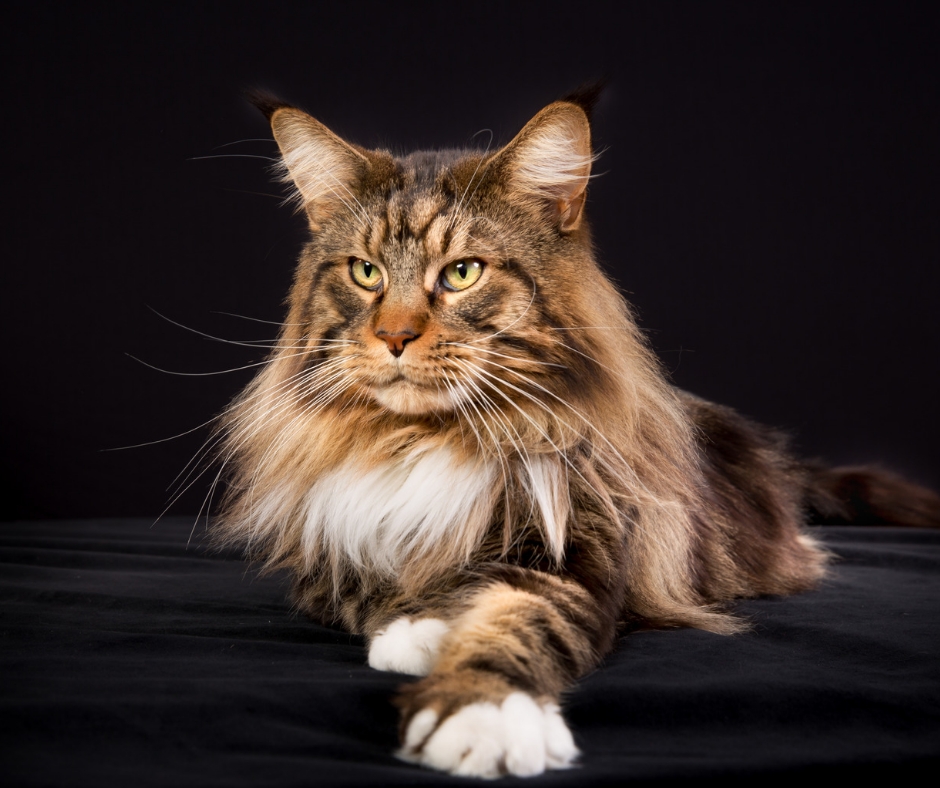
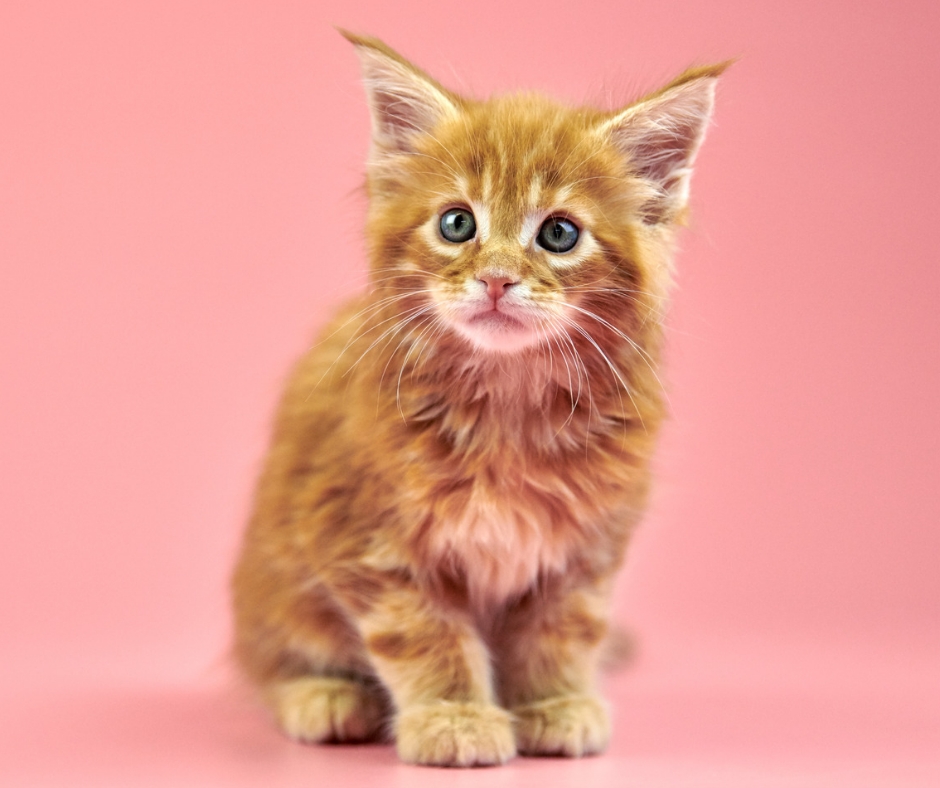
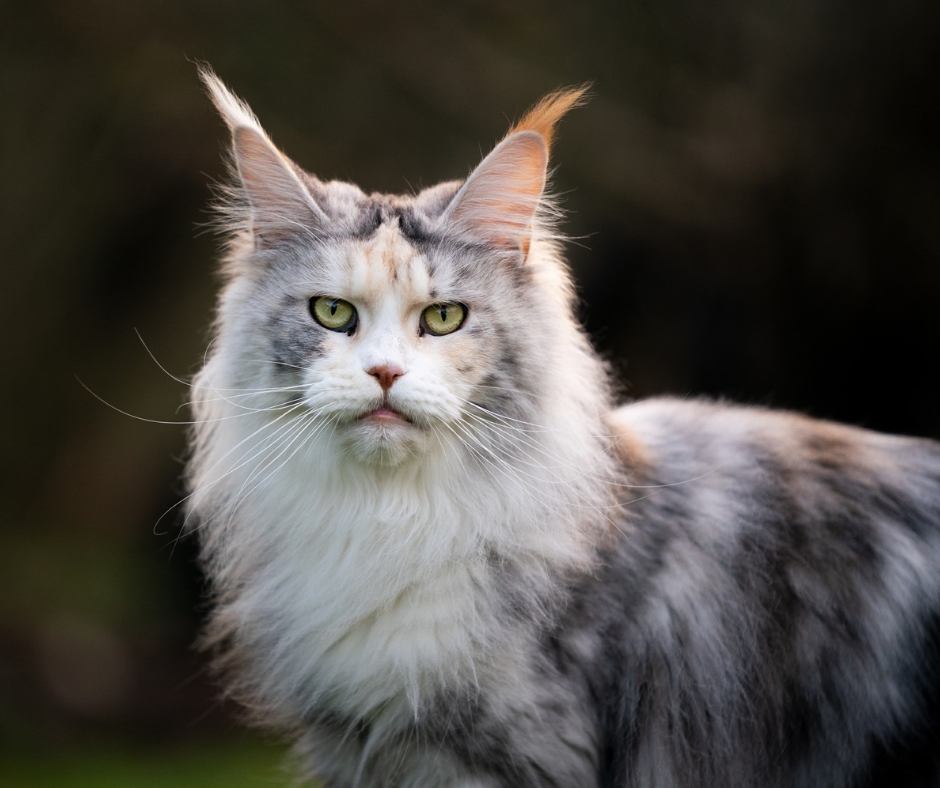
Maine Coons are among the most photogenic of all cat breeds. Their luxurious coats, expressive eyes, tufted ears, and impressive size make them a favorite of photographers and cat lovers alike. Yet these gentle giants are much more than a beautiful face. From playful kittens and majestic adults to affectionate family companions, every stage of a Maine Coon’s life showcases the intelligence, confidence, and friendly personality that have made the breed famous around the world.
Browse the gallery below to see Maine Coons in a variety of everyday situations, including relaxing at home, playing with children, meeting other pets, exploring outdoors on a harness, enjoying grooming sessions, and showing off the many beautiful coat colors and patterns recognized within the breed.
Back to Page Menu
Maine Coon Personality and Temperament
Typical Personality Traits
The Maine Coon has earned its reputation as the “gentle giant” for good reason. Despite its impressive size, this breed is remarkably friendly, patient, and affectionate. Maine Coons thrive on companionship and usually enjoy being involved in whatever their families are doing. Rather than demanding constant attention, they prefer to quietly follow their people from room to room, supervising daily activities with calm curiosity.
Highly intelligent and playful, Maine Coons retain their kitten-like enthusiasm well into adulthood. They enjoy interactive toys, puzzle feeders, climbing cat trees, and games such as fetch. Their intelligence also makes them quick learners, and many can be taught simple tricks or to walk comfortably on a harness.
Unlike some highly vocal breeds, Maine Coons typically communicate with soft chirps, trills, and gentle meows. Their expressive voices, combined with their affectionate nature and easygoing personality, make them delightful companions for families of all sizes.
Confidence and Sensitivity
Maine Coons are generally confident, adaptable cats that take changes in stride. They tend to investigate new objects, visitors, and environments with curiosity rather than fear. While they are independent enough to entertain themselves for short periods, they also form strong bonds with their families and appreciate daily interaction.
Although they are resilient cats, Maine Coons are sensitive to the emotional atmosphere in the home. They respond best to calm, positive handling and are rarely aggressive when treated with kindness and respect. Harsh discipline is unnecessary and can damage the trust they naturally develop with their owners.
Behaviour Around New People
Most Maine Coons are welcoming and sociable around visitors. While some may observe strangers from a distance at first, many quickly approach to investigate and often enjoy meeting new people. Their calm, friendly demeanor makes them excellent companions in busy households where guests frequently come and go.
Early socialization further strengthens these traits. Kittens exposed to a variety of people, sounds, and everyday experiences typically grow into confident adults that adapt well to changing situations and unfamiliar environments.
How Much Attention Does This Breed Need?
Maine Coons enjoy being close to their families but are not usually considered clingy. They appreciate daily play sessions, conversation, and opportunities to participate in household life, yet they are generally content relaxing nearby while their owners work or unwind. Their balanced personality makes them an excellent choice for people who want an affectionate companion without a cat that constantly demands attention.
These intelligent cats do need mental stimulation. Providing climbing trees, scratching posts, interactive toys, puzzle feeders, and regular play sessions helps prevent boredom and keeps both their minds and bodies healthy. Because they are social animals, they also benefit from companionship, whether from family members or another compatible pet if left alone for extended periods.
Beginner Mistake to Avoid: Don’t mistake your Maine Coon’s independent streak for a lack of affection. These cats often show their love by quietly staying close rather than constantly sitting on your lap. Give them opportunities to be involved in your daily routine, provide regular interactive play, and let the relationship develop naturally—you’ll likely end up with one of the most devoted feline companions you’ll ever own.

Back to Page Menu
Life With a Maine Coon
What Is a Typical Day Like?
Living with a Maine Coon is often described as sharing your home with a friendly, furry roommate. These cats enjoy being involved in family life and are happiest when they can observe or participate in everyday activities. A typical day includes greeting family members in the morning, relaxing nearby while people work or watch television, enjoying several play sessions, exploring cat trees and window perches, and taking long, comfortable naps between bursts of activity.
Although they appreciate affection, Maine Coons are generally not demanding. They are content to spend time near their favorite people and often choose to simply be in the same room rather than constantly seeking attention.
Will This Cat Follow You Around?
Yes—many Maine Coons are famous for quietly following their owners from room to room. Rather than constantly asking to be picked up or cuddled, they usually prefer to supervise whatever you’re doing. Whether you’re working in the kitchen, reading a book, or gardening on the patio, your Maine Coon will often settle nearby, curious to see what’s happening.
This loyal, companionable nature is one reason they’re frequently described as having “dog-like” personalities.
Does This Breed Jump on Counters and High Furniture?
Despite their large size, Maine Coons are surprisingly agile climbers and excellent jumpers. Many enjoy exploring tall cat trees, bookshelves, and sturdy furniture that allows them to observe the household from above. Some will investigate kitchen counters simply because they’re curious.
Providing tall cat trees, sturdy shelving, and window perches gives them appropriate places to climb and often reduces unwanted exploration of countertops and tables.
Will This Cat Wake You Early?
Most Maine Coons are fairly considerate housemates. While some quickly learn breakfast schedules and may greet you with gentle chirps or soft paw taps in the morning, they are generally less demanding than some highly vocal breeds. Maintaining regular feeding times and avoiding rewarding very early wake-up calls helps establish good habits.
Does This Breed Need Constant Entertainment?
No, but Maine Coons do appreciate regular mental and physical stimulation. Interactive toys, puzzle feeders, climbing structures, scratching posts, and daily play sessions help satisfy their curiosity and intelligence. They are capable of entertaining themselves for periods of time, but they thrive when their families make time for interactive play each day.
Without sufficient enrichment, an intelligent Maine Coon may invent its own games—which could include opening cupboards, investigating drawers, or relocating small household items.
Common Household Habits and Quirks
- Following family members from room to room.
- Greeting people at the door.
- Chirping and trilling instead of loud meowing.
- Carrying toys around the house.
- Playing fetch with favorite toys.
- Fascination with running water, sinks, or dripping faucets.
- Stretching out in amusing sleeping positions due to their large size.
- Watching birds and wildlife for hours from a favorite window perch.
What Owners Often Find Most Surprising
Many first-time Maine Coon owners are surprised by how gentle and polite these impressive cats are. Despite weighing considerably more than the average house cat, they move gracefully through the home and usually interact carefully with children and other pets.
Owners are also often amazed by how long Maine Coons remain playful. Even fully grown adults frequently chase toys, climb cat trees, and engage in kitten-like antics well into middle age. Combined with their affectionate personalities and quiet, musical voices, these traits make living with a Maine Coon both entertaining and deeply rewarding.
Back to Page Menu
Affection, Handling and Lap-Cat Tendencies
Is the Maine Coon Affectionate?
Absolutely. The Maine Coon is widely regarded as one of the most affectionate and people-oriented cat breeds. These gentle giants enjoy being close to their families and often seek out opportunities to spend time with the people they love. While they are not usually demanding or overly clingy, they form deep, lasting bonds and genuinely enjoy participating in everyday household life.
Maine Coons are often happiest simply being near their owners. Whether you’re working at your desk, cooking dinner, or relaxing on the sofa, don’t be surprised if your Maine Coon quietly settles nearby to keep you company.
Is This Breed a Lap Cat?
Sometimes—but not always. While some Maine Coons love curling up on a lap, many prefer to sit beside you rather than directly on top of you. Considering that adult males can weigh well over 18 pounds (8 kg), this may be just as well! Instead, many choose to lean against your legs, stretch out beside you on the couch, or sleep at the foot of the bed.
Every Maine Coon has its own personality, but most are exceptionally affectionate without constantly insisting on lap time.
Does This Cat Enjoy Being Picked Up?
Most Maine Coons tolerate being picked up well, especially if they’ve been gently handled from kittenhood. However, because of their substantial size and weight, many prefer being supported securely rather than carried for long periods.
Always lift a Maine Coon with both hands, supporting both the chest and hindquarters. Respect your cat’s body language, and allow it to decide when it’s ready to be put down. Gentle handling helps build trust and encourages a lifetime of comfortable interactions.
Does the Breed Bond With One Person?
Maine Coons usually bond strongly with their entire family rather than becoming attached to just one individual. They often have a favorite person who provides the most attention or care, but they generally enjoy spending time with everyone in the household, including children and other pets.
This sociable nature makes them excellent family companions, as they are usually happy to divide their affection among multiple people rather than choosing a single favorite.
How Does This Cat Show Affection?
Maine Coons have many charming ways of expressing their affection, including:
- Following their owners from room to room.
- Greeting family members at the door.
- Rubbing against legs or gently head-butting for attention.
- Sleeping nearby or sharing the bed.
- Chirping, trilling, and softly “talking” to their favorite people.
- Bringing toys as an invitation to play.
- Sitting beside family members during quiet activities.
- Making slow blinks, gentle purring, and maintaining relaxed eye contact.
Rather than constantly demanding cuddles, Maine Coons often express their devotion through quiet companionship. Their steady, loyal presence is one of the qualities that owners treasure most about this remarkable breed.
Back to Page Menu
Vocalness and Communication
Is the Maine Coon Vocal?
Maine Coons are moderately vocal, but they communicate quite differently from many other cat breeds. Rather than producing frequent, loud meows, they are famous for their soft chirps, trills, and melodic warbling sounds. These unique vocalizations are one of the breed’s most charming characteristics and often surprise first-time owners.
Many Maine Coons seem to “hold conversations” with their families, responding when spoken to or greeting their owners with a series of gentle chirps. Their voices are usually soft and pleasant, making them well suited to apartment living and households where excessive noise would be unwelcome.
Common Reasons for Vocalizing
Maine Coons are intelligent and communicative, using different sounds to express their needs and emotions. Common reasons they vocalize include:
- Greeting family members when they arrive home.
- Requesting meals or reminding owners that dinner time has arrived.
- Inviting people to play or interact.
- Seeking attention or companionship.
- Watching birds or wildlife through a window, often accompanied by excited chirping.
- Expressing curiosity when exploring something new.
- Communicating discomfort, stress, or illness if their normal behavior changes.
Because Maine Coons are naturally observant and social, they often use their voices to interact with people rather than simply demanding food or attention.
Body Language and Nonverbal Communication
Like all cats, Maine Coons rely heavily on body language to communicate. Their relaxed posture, expressive tails, and distinctive facial expressions often reveal more than their voices alone.
- Slow blinking: A sign of trust, affection, and relaxation.
- Head bunting and cheek rubbing: Friendly greetings and scent-marking people they love.
- An upright tail with a curved tip: Happiness, confidence, and a friendly greeting.
- Purring: Usually indicates contentment, although cats may also purr when anxious or recovering from illness.
- Gentle paw taps: A polite request for attention or play.
- Relaxed ears and whiskers: A calm, comfortable cat.
- Flattened ears, twitching tail, or dilated pupils: Signs of overstimulation, fear, or irritation that should be respected.
Learning to recognize both the Maine Coon’s gentle vocalizations and subtle body language allows owners to better understand their cat’s needs and helps strengthen the trusting bond that makes this breed such an exceptional companion.
Back to Page Menu
Intelligence, Training and Household Manners
Maine Coons are among the most intelligent and trainable of all domestic cat breeds. Their curiosity, problem-solving ability, and eagerness to interact with people make them quick learners that often enjoy training sessions as much as playtime. With patience, positive reinforcement, and consistency, most Maine Coons can learn household routines, basic commands, and even impressive tricks.
How Intelligent Is the Maine Coon?
Maine Coons are exceptionally bright cats with excellent memories and a natural curiosity about the world around them. They quickly learn feeding schedules, recognize family routines, and often figure out how to open doors, cupboards, and containers if given the opportunity. Their intelligence allows them to solve puzzle toys, adapt to new environments, and understand cause-and-effect relationships surprisingly well.
Many owners describe their Maine Coon as almost dog-like because of its willingness to interact, communicate, and participate in family activities rather than remaining independent all day.
Can This Breed Learn Tricks?
Yes. Maine Coons are one of the easiest cat breeds to train. Many happily learn to:
- Come when called.
- Sit on cue.
- High-five or shake paws.
- Play fetch with favorite toys.
- Jump onto designated platforms.
- Enter their carrier on command.
- Walk comfortably on a harness and leash.
Short, enjoyable training sessions using treats, praise, and toys produce the best results. Keeping sessions fun helps maintain their enthusiasm and strengthens the bond between cat and owner.
Litter Box Habits
Maine Coons are generally very reliable with their litter box habits. They are naturally clean animals and usually adapt quickly to a properly maintained litter box. Because of their large size, however, they often require an extra-large litter box that allows them to turn around comfortably.
Scooping the litter daily and providing one litter box per cat, plus one extra, encourages excellent litter habits throughout life.
Scratching and Furniture Protection
Like all cats, Maine Coons scratch to maintain healthy claws, stretch their muscles, and mark territory. Their strength means they need sturdy scratching posts that won’t wobble or tip over. Tall sisal-covered posts, heavy scratching trees, and horizontal scratchers usually provide the best options.
Reward your Maine Coon for using approved scratching surfaces and redirect unwanted scratching calmly without punishment. Regular nail trimming also helps minimize accidental damage to furniture.
Carrier and Veterinary Visit Training
Introducing the carrier early makes veterinary visits far less stressful. Leave the carrier open at home as a comfortable resting place, adding soft bedding and occasional treats so your cat develops positive associations with it.
Practice short car rides and gentle handling of paws, ears, and mouth from kittenhood whenever possible. These simple exercises help Maine Coons remain relaxed during routine examinations and grooming appointments.
Harness and Leash Training
Maine Coons are one of the best cat breeds for harness training. Their confidence, curiosity, and intelligence make many eager to explore safely outdoors alongside their owners.
Begin indoors using a properly fitted escape-proof harness. Allow your cat to wear it for short periods before attaching a lightweight leash. Once comfortable, gradually introduce quiet outdoor environments. Never force a nervous cat outside, and always supervise outdoor adventures.
Clicker Training and Reward-Based Learning
Clicker training works exceptionally well with Maine Coons. By pairing the sound of the clicker with treats or praise, owners can clearly mark desired behaviors, allowing cats to learn quickly and enthusiastically.
Positive reinforcement builds confidence and trust while encouraging your Maine Coon to think and problem-solve. Avoid punishment or scolding, which can create fear and reduce your cat’s willingness to participate in training.
Cats Central Recommendation: Challenge your Maine Coon’s remarkable intelligence every day with puzzle feeders, interactive toys, climbing opportunities, and short reward-based training sessions. A mentally stimulated Maine Coon is happier, more confident, less likely to develop unwanted behaviors, and an even more enjoyable companion.
Can Maine Coons Be Toilet Trained?
Yes, many Maine Coons can be successfully toilet trained thanks to their intelligence, curiosity, and willingness to learn new routines. Some owners choose toilet training to eliminate litter box maintenance and reduce ongoing litter costs. However, it isn’t the right choice for every cat or every household.
Toilet training should always be introduced gradually using a proven training system over several weeks or months. Rushing the process can confuse your cat and lead to inappropriate elimination habits. Positive reinforcement and patience are essential throughout training.
While some Maine Coons adapt extremely well, there are a few important considerations. Toilet-trained cats cannot bury their waste, which is a natural feline behavior that many cats find comforting. It also becomes more difficult to monitor urine and stool for early signs of illness, something veterinarians often recommend as part of routine health monitoring.
Senior cats, cats with arthritis, mobility issues, or certain medical conditions may also find climbing onto a toilet uncomfortable or unsafe. For these reasons, many feline behavior specialists continue to recommend a traditional litter box as the best long-term option for most cats.
If you decide to toilet train your Maine Coon, ensure that at least one toilet remains consistently available and be prepared to return to a litter box if your cat shows signs of stress or discomfort.
Back to Page Menu
Exercise, Play and Enrichment
Daily Activity Needs
Although Maine Coons are not hyperactive cats, they do require regular daily exercise to stay healthy, mentally stimulated, and maintain an ideal weight. Most enjoy several short play sessions spread throughout the day rather than one long period of activity. Interactive games that encourage stalking, chasing, climbing, and problem-solving closely mimic their natural hunting instincts.
Adult Maine Coons typically benefit from 20 to 40 minutes of active play each day, while energetic kittens often require considerably more. Regular exercise also helps reduce boredom and supports healthy joints, muscles, and cardiovascular fitness throughout their long lives.
Favourite Types of Play
Maine Coons are playful well into adulthood and often retain a kitten-like enthusiasm for games throughout much of their lives. Favorite activities include:
- Chasing feather wand toys.
- Playing fetch with soft balls or toy mice.
- Batting rolling toys across hardwood floors.
- Hunting treats hidden around the house.
- Exploring tunnels and cat play tents.
- Watching birds and squirrels from a secure window perch.
- Interactive games with family members.
Many Maine Coons invent their own games and enjoy carrying toys from room to room before proudly presenting them to their owners.
Climbing and Vertical Space
Despite their impressive size, Maine Coons are excellent climbers and enjoy observing their surroundings from elevated locations. A sturdy, extra-large cat tree designed for heavier breeds is one of the best investments you can make.
Window perches, climbing shelves, and tall scratching posts allow them to exercise naturally while satisfying their instinct to survey their territory from above. Because of their weight, all climbing furniture should be stable, durable, and securely anchored if necessary.
Puzzle Feeders and Mental Enrichment
Maine Coons thrive when given opportunities to solve problems. Puzzle feeders, treat-dispensing toys, snuffle mats, and food-search games encourage natural foraging behaviors while providing valuable mental exercise.
Rotating toys every week or two helps keep them interesting, and hiding treats around the home creates enjoyable “treasure hunts” that stimulate both body and mind. Training sessions, clicker games, and learning new tricks provide additional enrichment for this highly intelligent breed.
Best Toys for the Breed
Maine Coons generally enjoy toys that encourage movement, exploration, and interaction. Popular choices include:
- Large feather wand toys.
- Soft balls and toy mice for fetching.
- Interactive electronic toys.
- Puzzle feeders and treat dispensers.
- Cat tunnels.
- Large scratching posts and climbing trees.
- Crinkle toys and kickers.
- Sturdy chew toys designed for cats.
Choose durable toys appropriate for larger cats, and inspect them regularly for wear or loose parts that could become a safety hazard.
Preventing Boredom and Destructive Behaviour
A bored Maine Coon is an inventive Maine Coon. Without sufficient physical and mental stimulation, these intelligent cats may begin opening cupboards, climbing onto unsuitable surfaces, scratching furniture, or seeking entertainment in ways their owners may not appreciate.
Providing a predictable daily routine, regular play sessions, climbing opportunities, scratching posts, puzzle toys, and plenty of family interaction helps prevent unwanted behaviors before they begin. Homes with another friendly cat or a cat-friendly dog may also provide valuable companionship for social Maine Coons.
How Much Interactive Play Is Needed?
Most Maine Coons benefit from at least two or three interactive play sessions each day, lasting around 10 to 15 minutes each. Using wand toys, balls, laser pointers (always ending with a toy they can actually catch), or games of fetch helps satisfy their hunting instincts while strengthening the bond between cat and owner.
Interactive play is about more than exercise—it provides mental stimulation, builds confidence, reduces stress, and helps keep your Maine Coon happy well into its senior years. A cat whose mind is regularly challenged is far less likely to develop boredom-related behavioral problems.
Back to Page Menu
Maine Coon Size and Appearance
Average Weight and Body Size
The Maine Coon is one of the largest domestic cat breeds in the world. Adult females typically weigh between 8 and 15 pounds (3.6–6.8 kg), while males usually weigh 13 to 18 pounds (5.9–8.2 kg), with some exceptionally large, healthy individuals exceeding 20 pounds (9 kg). Size alone should never be the goal, however, as a lean, muscular Maine Coon is healthier than an overweight one.
These cats have long, rectangular bodies, broad chests, and solid bone structure that gives them an impressive yet well-balanced appearance. Combined with their luxurious coat and magnificent bushy tail, they often appear even larger than they actually are.
Body Type
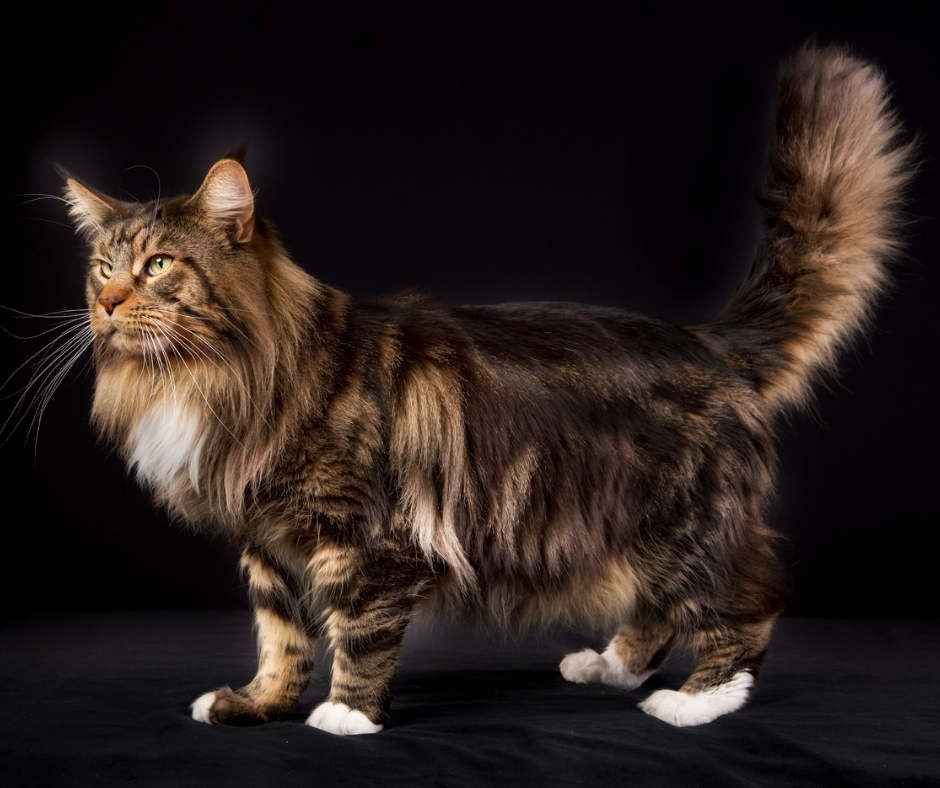
The Maine Coon is a powerful, athletic cat built for endurance rather than speed. Its body is long and rectangular with substantial musculature, strong shoulders, and a broad chest. Large, well-padded paws provide excellent stability and were originally adapted for walking across snow, while the long, bushy tail helped provide warmth during cold New England winters.
Despite their size, Maine Coons move with surprising grace and agility. They are capable climbers and jumpers, although they often prefer sturdy, deliberate movements rather than the acrobatic leaps seen in lighter breeds.
Head, Eyes and Ears
The Maine Coon has a distinctive, balanced head with a gently squared muzzle that gives the breed its characteristic expression. High cheekbones and a strong chin contribute to its confident yet friendly appearance.
The eyes are large, expressive, and slightly oval, appearing rounder when fully alert. Accepted eye colors include shades of gold, green, copper, and, in white Maine Coons, blue or odd-colored eyes.
One of the breed’s most recognizable features is its large ears. They are set high on the head, wide at the base, and often adorned with prominent lynx-like tips and long ear furnishings that help protect against cold weather while enhancing the breed’s majestic appearance.
Male and Female Size Differences
Male Maine Coons are usually noticeably larger than females. In addition to weighing more, males often develop broader heads, heavier bone structure, thicker necks, and a fuller ruff around the neck and chest. Females retain the same elegant proportions but are generally finer-boned and more refined in appearance.
Personality differences between the sexes are subtle. Both males and females are affectionate, intelligent, and sociable, with individual temperament influenced more by genetics, socialization, and environment than by gender.
When Is a Maine Coon Fully Grown?
Unlike most domestic cats, which reach their adult size by 12 to 18 months of age, Maine Coons mature very slowly. Most continue developing physically until they are three to five years old. During this extended growth period, they gradually build muscle, broaden through the shoulders and chest, and develop their full adult coat.
This slow maturation is one of the breed’s defining characteristics. Even as young adults, many Maine Coons retain their playful, curious, kitten-like personalities while steadily growing into the magnificent cats they are destined to become. Owners should provide a balanced diet, appropriate exercise, and regular veterinary care throughout this extended growth period to support healthy development.
Back to Page Menu
Maine Coon Size and Appearance
Average Weight and Body Size
The Maine Coon is one of the largest domestic cat breeds in the world. Adult females typically weigh between 8 and 15 pounds (3.6–6.8 kg), while males usually weigh 13 to 18 pounds (5.9–8.2 kg), with some exceptionally large, healthy individuals exceeding 20 pounds (9 kg). Size alone should never be the goal, however, as a lean, muscular Maine Coon is healthier than an overweight one.
These cats have long, rectangular bodies, broad chests, and solid bone structure that gives them an impressive yet well-balanced appearance. Combined with their luxurious coat and magnificent bushy tail, they often appear even larger than they actually are.
Body Type
The Maine Coon is a powerful, athletic cat built for endurance rather than speed. Its body is long and rectangular with substantial musculature, strong shoulders, and a broad chest. Large, well-padded paws provide excellent stability and were originally adapted for walking across snow, while the long, bushy tail helped provide warmth during cold New England winters.
Despite their size, Maine Coons move with surprising grace and agility. They are capable climbers and jumpers, although they often prefer sturdy, deliberate movements rather than the acrobatic leaps seen in lighter breeds.
Head, Eyes and Ears
The Maine Coon has a distinctive, balanced head with a gently squared muzzle that gives the breed its characteristic expression. High cheekbones and a strong chin contribute to its confident yet friendly appearance.
The eyes are large, expressive, and slightly oval, appearing rounder when fully alert. Accepted eye colors include shades of gold, green, copper, and, in white Maine Coons, blue or odd-colored eyes.
One of the breed’s most recognizable features is its large ears. They are set high on the head, wide at the base, and often adorned with prominent lynx-like tips and long ear furnishings that help protect against cold weather while enhancing the breed’s majestic appearance.
Male and Female Size Differences
Male Maine Coons are usually noticeably larger than females. In addition to weighing more, males often develop broader heads, heavier bone structure, thicker necks, and a fuller ruff around the neck and chest. Females retain the same elegant proportions but are generally finer-boned and more refined in appearance.
Personality differences between the sexes are subtle. Both males and females are affectionate, intelligent, and sociable, with individual temperament influenced more by genetics, socialization, and environment than by gender.
When Is a Maine Coon Fully Grown?
Unlike most domestic cats, which reach their adult size by 12 to 18 months of age, Maine Coons mature very slowly. Most continue developing physically until they are three to five years old. During this extended growth period, they gradually build muscle, broaden through the shoulders and chest, and develop their full adult coat.
This slow maturation is one of the breed’s defining characteristics. Even as young adults, many Maine Coons retain their playful, curious, kitten-like personalities while steadily growing into the magnificent cats they are destined to become. Owners should provide a balanced diet, appropriate exercise, and regular veterinary care throughout this extended growth period to support healthy development.
Coat Texture and Length
The Maine Coon’s coat is long, shaggy, and beautifully adapted to cold climates. Unlike the thick, cottony coats of some long-haired breeds, the Maine Coon’s fur has a silky, slightly coarse texture that naturally resists water and sheds dirt. The coat is shorter across the shoulders and gradually becomes longer along the sides, belly, britches (the fur on the hind legs), and tail.
A prominent neck ruff, ear furnishings, toe tufts, and the breed’s magnificent plume-like tail complete its distinctive appearance. Although luxurious, the coat is generally less prone to matting than many other long-haired breeds when brushed regularly.
Recognized Colors
Maine Coons come in one of the widest ranges of colors found in any pedigree cat breed. Major cat registries recognize dozens of beautiful color combinations, including:
- Brown
- Black
- Blue (a soft gray)
- Red
- Cream
- White
- Silver
- Blue-Cream
- Tortoiseshell
- Calico
- Smoke
- Parti-color and bi-color combinations
Brown tabby remains the classic and most recognizable Maine Coon coloration, but every accepted color showcases the breed’s magnificent coat in its own unique way.
Recognized Patterns
Maine Coons may display numerous coat patterns, including:
- Classic (blotched) tabby
- Mackerel tabby
- Ticked tabby
- Spotted tabby
- Solid
- Smoke
- Shaded
- Tortoiseshell
- Calico
- Bi-color
- Van pattern
- Parti-color combinations
While nearly every color and pattern combination is accepted, color-point patterns (such as those seen in Siamese and Himalayan cats) are not recognized as part of the traditional Maine Coon breed standard.
Eye Colors
Maine Coons have large, expressive eyes that contribute greatly to their gentle expression. Depending on coat color and genetics, accepted eye colors include:
- Gold
- Green
- Copper
- Blue (typically seen in white Maine Coons)
- Odd-eyed (one blue and one gold or green), also primarily found in white cats
Eye color develops gradually during kittenhood and usually reaches its full adult shade by the time the cat is around one year old.
How the Coat Changes With Age
Maine Coons are slow-maturing cats, and their coats develop alongside their bodies over several years. Kittens begin with a softer, shorter coat that gradually becomes longer, fuller, and more textured as they mature. The impressive neck ruff, breeches, ear furnishings, and full tail often continue developing until the cat is three to five years old.
Seasonal shedding is normal, particularly during spring and autumn, when the coat adjusts to changing temperatures. Senior Maine Coons may experience some thinning or changes in coat texture, but with proper nutrition, regular grooming, and routine veterinary care, most maintain their beautiful coats well into old age.
Back to Page Menu
Maine Coon Grooming and Coat Care
Brushing
Although the Maine Coon has a long, luxurious coat, it is surprisingly manageable compared to many other long-haired breeds. Its silky, water-resistant fur is less prone to matting than cottony coats, but regular brushing is still essential to remove loose hair, prevent tangles, and distribute natural skin oils.
Most Maine Coons benefit from thorough brushing two or three times each week, with daily grooming recommended during seasonal shedding periods. Pay particular attention to areas where mats commonly develop, including behind the ears, under the front legs, around the neck ruff, on the belly, and around the hindquarters.
Bathing
Maine Coons generally keep themselves very clean and only require occasional baths unless they become unusually dirty or are being prepared for a cat show. Fortunately, many Maine Coons are unusually tolerant of water and may even enjoy playing with it, making bath time easier than with many other breeds.
Use a gentle cat-specific shampoo, rinse thoroughly, and dry the coat completely, especially during cooler weather. Frequent bathing is unnecessary and may strip the coat of its natural protective oils.
Nail Trimming
Trim your Maine Coon’s nails every two to four weeks to prevent overgrowth and reduce accidental scratches. Because these are large, powerful cats, keeping their claws well maintained also helps protect furniture and reduces the chance of snagging on carpets or fabrics.
Provide sturdy scratching posts throughout the home to help naturally condition the claws between trims.
Ear and Eye Care
Inspect your Maine Coon’s ears weekly for excessive wax, debris, or unpleasant odors that could indicate infection. Healthy ears should appear clean and pale pink. Clean only the visible outer ear using a veterinarian-approved ear cleaner when necessary.
The eyes should be bright, clear, and free from excessive discharge. A soft, damp cloth can be used to gently wipe away minor tear staining. Persistent redness, squinting, or discharge should always be examined by a veterinarian.
Dental Care
Dental health is an important but often overlooked aspect of Maine Coon care. Brushing your cat’s teeth several times each week with a cat-safe toothpaste helps reduce plaque, tartar buildup, and gum disease. Daily brushing is ideal whenever possible.
Dental treats, specially formulated dental diets, and regular veterinary dental examinations can also contribute to long-term oral health.
Hairballs
Because they groom themselves frequently and have long coats, Maine Coons may occasionally develop hairballs, particularly during spring and autumn shedding seasons. Regular brushing removes loose hair before it is swallowed, making grooming the most effective way to reduce hairball formation.
A high-quality diet, adequate hydration, and hairball-control foods or veterinarian-approved supplements may also help if hairballs become frequent. Persistent vomiting, loss of appetite, or repeated unsuccessful attempts to pass a hairball require prompt veterinary attention.
Professional Grooming
Most pet Maine Coons do not require routine professional grooming if they are brushed consistently at home. However, some owners choose to schedule occasional grooming appointments during heavy shedding seasons or if mats become difficult to remove safely.
Professional groomers can also assist with nail trimming, sanitary trims around the hindquarters if needed, ear cleaning, and bathing for owners who are less comfortable performing these tasks themselves.
Beginner Mistake to Avoid: Don’t assume that because a Maine Coon’s coat is naturally resistant to tangles, it doesn’t need regular grooming. Mats can develop gradually in hidden areas such as the armpits, belly, and behind the ears, where they may become painful if left untreated. A few minutes of brushing several times a week is far easier—and much more comfortable for your cat—than trying to remove severe mats later.
Back to Page Menu
Shedding and Allergies
How Much Does the Maine Coon Shed?
Maine Coons are moderate to heavy shedders. Their long, dense, double-layered coats naturally shed throughout the year, with heavier shedding typically occurring during the spring and autumn as they adjust to seasonal temperature changes.
Regular brushing two or three times a week removes loose hair before it ends up on furniture, clothing, and floors. During peak shedding seasons, daily brushing can make a noticeable difference. A nutritious diet rich in omega-3 and omega-6 fatty acids also helps support healthy skin and a glossy, well-conditioned coat.
Although shedding is inevitable with this breed, consistent grooming keeps it very manageable for most households.
Is This Breed Hypoallergenic?
No. Maine Coons are not considered hypoallergenic. Like all cats, they produce the Fel d 1 protein, the primary allergen responsible for most cat allergies. This protein is found in saliva, skin oils, and dander, and is spread onto the coat during grooming.
Because Maine Coons have abundant fur, they may distribute more loose hair and dander around the home than short-haired breeds. However, individual cats produce varying amounts of allergens, so some allergy sufferers may tolerate one Maine Coon better than another.
If someone in your household has cat allergies, spending time with an adult Maine Coon before bringing one home is strongly recommended.
Managing Cat Hair and Allergens at Home
While no grooming routine can eliminate allergens completely, several simple strategies can significantly reduce the amount of hair and dander in your home:
- Brush your Maine Coon several times each week, preferably outdoors or in an easy-to-clean area.
- Vacuum carpets, rugs, and upholstered furniture regularly using a vacuum with a HEPA filter.
- Use air purifiers with HEPA filtration in frequently used rooms.
- Wash your cat’s bedding and favorite blankets regularly.
- Keep bedrooms or other allergy-sensitive areas cat-free if necessary.
- Wash your hands after extended petting or grooming sessions.
- Feed a high-quality diet to promote healthy skin and reduce excessive shedding.
With regular grooming and good household cleaning habits, most owners find that living with a Maine Coon’s magnificent coat is well worth the extra effort. Their affectionate personalities and loyal companionship more than compensate for the occasional tumbleweed of cat hair drifting across the floor.
Back to Page Menu
Maine Coon Nutrition and Feeding
Choosing an Appropriate Cat Food
Maine Coons benefit from a complete and balanced diet formulated for their age, activity level, and overall health. Look for high-quality cat foods that list animal-based protein, such as chicken, turkey, salmon, or beef, as the primary ingredient. Protein supports their large, muscular bodies, while moderate fat provides energy and helps maintain a healthy skin and coat.
Avoid foods that rely heavily on inexpensive fillers or artificial additives. Your veterinarian can recommend a suitable diet if your Maine Coon has specific health concerns or dietary requirements.
Wet Food, Dry Food or Both?
Many veterinarians recommend feeding a combination of wet and dry food. Wet food provides valuable moisture that supports urinary tract and kidney health, while dry food is convenient, stays fresh longer, and may provide some mechanical cleaning of the teeth, although it should not replace regular dental care.
A mixed-feeding approach often gives Maine Coons the benefits of both diets while adding variety to mealtimes. Always introduce new foods gradually over several days to minimize digestive upset.
Kitten Feeding
Maine Coon kittens grow more slowly than most other breeds and continue developing for several years. During their first year, they require a high-quality kitten food that provides the extra protein, calories, vitamins, and minerals needed to support healthy bone and muscle development.
Young kittens typically eat three or four small meals each day. As they mature, meal frequency can gradually be reduced according to your veterinarian’s recommendations and the food manufacturer’s feeding guidelines.
Adult Feeding
Healthy adult Maine Coons generally do well with two measured meals each day. Portion sizes should be adjusted according to body condition, activity level, age, and whether your cat lives exclusively indoors or also enjoys supervised outdoor adventures.
Free-feeding may work for some cats, but because Maine Coons are large and food-motivated, scheduled meals often make it easier to monitor appetite and maintain a healthy body weight.
Senior Feeding
As Maine Coons age, their nutritional needs may change. Senior cats often benefit from diets that provide highly digestible protein, controlled calories, joint-supporting nutrients, and appropriate levels of vitamins and minerals.
Regular veterinary checkups become increasingly important during the senior years so any dietary adjustments can be made promptly if kidney disease, arthritis, dental disease, or other age-related conditions develop.
Weight Management
Because Maine Coons are naturally large cats, it can sometimes be difficult to recognize unhealthy weight gain. Their broad frames should feel muscular rather than padded with excess fat. You should be able to feel the ribs beneath a thin layer of tissue without them being overly prominent.
Maintaining an ideal body condition through measured meals, regular play, and routine veterinary monitoring reduces the risk of obesity, diabetes, arthritis, and other health problems while helping your Maine Coon remain active throughout its long life.
Water Intake and Hydration
Fresh, clean water should always be available. Many Maine Coons are fascinated by moving water and may drink more readily from a pet drinking fountain than from a traditional bowl. Adequate hydration supports kidney function, urinary tract health, digestion, and overall wellbeing.
Including wet food as part of the diet is another excellent way to increase daily water intake, particularly for cats that naturally drink less.
Foods Cats Should Not Eat
Several common household foods are toxic or potentially dangerous for cats and should always be kept out of reach, including:
- Chocolate and cocoa products.
- Onions, garlic, chives, and leeks.
- Grapes and raisins.
- Alcohol.
- Caffeine-containing drinks and foods.
- Xylitol (an artificial sweetener found in some sugar-free products).
- Cooked bones.
- Raw bread dough.
- Large quantities of liver.
- Dog food as a long-term diet.
If you suspect your Maine Coon has eaten a toxic substance, contact your veterinarian or an emergency animal poison service immediately.
Cats Central Recommendation: Feed your Maine Coon according to its body condition, not simply its impressive size. These cats are naturally large and muscular, but they should never be overweight. Combine measured meals, high-quality nutrition, daily exercise, and regular veterinary checkups to help your gentle giant stay healthy for many years.
Back to Page Menu
Maine Coon Health and Lifespan
Average Lifespan
Maine Coons are generally healthy, long-lived cats with an average lifespan of 12 to 15 years. Many live well into their late teens when provided with excellent nutrition, routine veterinary care, regular exercise, and a safe indoor lifestyle. Genetics also play an important role, making it essential to obtain kittens from responsible breeders who perform appropriate health testing.
Common Health Concerns
Although the Maine Coon is considered a robust breed, it is predisposed to several health conditions that owners should be aware of. Early diagnosis and proper management often allow affected cats to enjoy a good quality of life.
Health concerns seen in the breed include:
- Hypertrophic cardiomyopathy (HCM).
- Hip dysplasia.
- Arthritis, particularly in senior cats.
- Obesity.
- Dental disease.
- Kidney disease in older cats.
- Urinary tract disorders.
Regular veterinary examinations are the best way to detect many of these conditions before obvious symptoms develop.
Inherited Conditions
Several inherited disorders occur more frequently in Maine Coons than in the general cat population.
- Hypertrophic Cardiomyopathy (HCM): The most significant inherited heart disease affecting the breed. It causes thickening of the heart muscle and may eventually lead to heart failure or blood clots.
- Hip Dysplasia: Although more commonly associated with dogs, Maine Coons have one of the highest rates of hip dysplasia among cat breeds. It can contribute to arthritis and reduced mobility.
- Spinal Muscular Atrophy (SMA): A hereditary neurological condition affecting muscle development. While affected cats are typically not painful and often live normal lifespans, responsible breeders routinely screen breeding cats to avoid producing affected kittens.
- Polycystic Kidney Disease (PKD): Less common than in some breeds but occasionally encountered.
Responsible breeders perform genetic testing and health screening to greatly reduce the likelihood of producing kittens affected by inherited diseases.
Recommended Health Screening
Before purchasing a Maine Coon kitten, ask the breeder about health testing performed on the parents. Recommended screening may include:
- DNA testing for HCM-associated mutations.
- DNA testing for Spinal Muscular Atrophy (SMA).
- Hip evaluations where appropriate.
- Cardiac examinations, including echocardiography when recommended.
- Routine veterinary examinations and parasite prevention.
Even healthy adult Maine Coons benefit from annual veterinary examinations, while senior cats should generally be examined every six months.
Preventive Veterinary Care
Preventive care plays a major role in helping Maine Coons enjoy long, healthy lives. Routine wellness visits allow veterinarians to monitor weight, heart health, joints, teeth, and overall condition while keeping vaccinations and parasite prevention up to date.
Owners should also monitor appetite, water intake, litter box habits, activity level, and behavior, as subtle changes are often the earliest signs of illness in cats.
Dental Health
Dental disease is one of the most common health problems seen in adult cats, including Maine Coons. Plaque and tartar can lead to gingivitis, painful tooth infections, and tooth loss if ignored.
Brushing your cat’s teeth several times each week using cat-safe toothpaste is the most effective way to maintain oral health. Regular veterinary dental examinations and professional cleanings when recommended further reduce the risk of serious dental disease.
Healthy Weight and Mobility
Because Maine Coons are naturally large and heavy-boned, owners sometimes overlook gradual weight gain. Excess body fat places additional strain on joints and increases the risk of arthritis, diabetes, and heart disease.
Maintaining a healthy weight through measured feeding, daily exercise, climbing opportunities, and regular play helps preserve mobility throughout life. Older Maine Coons particularly benefit from soft bedding, ramps or steps to favorite resting places, and routine veterinary assessment for arthritis.
Signs That Require Veterinary Attention
Contact your veterinarian promptly if your Maine Coon shows any of the following signs:
- Difficulty breathing or rapid breathing.
- Sudden weakness or collapse.
- Loss of appetite lasting more than 24 hours.
- Repeated vomiting or diarrhea.
- Difficulty urinating or frequent unsuccessful trips to the litter box.
- Persistent coughing.
- Noticeable weight loss.
- Limping or reluctance to jump.
- Significant changes in drinking, grooming, or behavior.
- Persistent lethargy or hiding.
Cats naturally hide illness, so even subtle changes in normal behavior deserve attention, especially in a breed predisposed to inherited heart disease.
Veterinary Reminder: This guide provides general educational information and should not replace professional veterinary advice. If your Maine Coon develops unusual symptoms, appears unwell, or experiences sudden changes in behavior, appetite, breathing, or mobility, seek prompt veterinary care. Early diagnosis often leads to better outcomes, particularly for conditions such as hypertrophic cardiomyopathy and hip disease.
Back to Page Menu
Living With Children
Are Maine Coons Good With Children?
Yes. Maine Coons are widely regarded as one of the best cat breeds for families with children. Their gentle, patient temperament and playful nature make them excellent companions for respectful youngsters of all ages. They are typically tolerant without being timid and often enjoy joining in family activities, games, and quiet cuddle time.
Because of their large size and calm confidence, Maine Coons are generally less easily intimidated than many smaller breeds. They are more likely to walk away from an uncomfortable situation than react aggressively, making them a reassuring choice for households with children. Nevertheless, every interaction should be supervised until both child and cat have learned to understand and respect one another.
Best Age Groups for Children
Maine Coons adapt well to families with children of almost any age when introductions are handled thoughtfully.
- Babies and toddlers: Always require close adult supervision. The cat should have safe, quiet places to retreat when it wants to rest.
- Preschool and elementary-aged children: Often form wonderful friendships with Maine Coons as they learn gentle petting, interactive play, and respect for the cat’s personal space.
- Older children and teenagers: Frequently enjoy teaching tricks, playing fetch, grooming, and even harness training with these highly intelligent cats.
The breed’s playful personality often means Maine Coons remain enthusiastic companions throughout a child’s growing years.
Teaching Children to Respect the Cat
Children should learn from an early age that cats are living companions, not toys. Teaching respectful handling helps build trust and creates a safer, happier relationship for everyone.
- Pet gently rather than hugging tightly.
- Never pull the tail, ears, whiskers, or fur.
- Allow the cat to walk away if it chooses.
- Avoid disturbing the cat while eating, sleeping, or using the litter box.
- Use toys—not hands—for interactive play.
- Encourage calm voices and gentle movements around the cat.
- Help children recognize when the cat wants affection and when it prefers quiet time.
Supervising early interactions teaches good habits that often lead to lifelong friendships between children and their feline companion.
Warning Signs That the Cat Needs Space
Even the most patient Maine Coon has limits. Learning to recognize signs of stress helps prevent accidents and allows the cat to feel safe.
- Tail twitching or thumping.
- Flattened ears.
- Dilated pupils.
- Growling, hissing, or swatting.
- Trying to hide or leave the room.
- Body becoming tense or crouched.
- Rapid tail flicking while being petted.
If your Maine Coon displays any of these signals, calmly allow it to move away without forcing further interaction. Teaching children to recognize and respect these cues helps build a trusting relationship and allows the breed’s naturally gentle personality to shine.
Back to Page Menu
Living With Other Cats
Do Maine Coons Usually Enjoy Feline Company?
Yes. Maine Coons are generally one of the most sociable cat breeds and often enjoy the companionship of other cats. Their relaxed, confident personalities and playful nature usually allow them to fit comfortably into multi-cat households. Many develop close friendships with other cats, grooming one another, sleeping together, and engaging in daily play sessions.
While every cat is an individual, Maine Coons are typically more accepting of feline companions than many breeds, particularly when introductions are handled gradually and respectfully.
Does This Breed Need Another Cat?
Not necessarily. A Maine Coon can live a perfectly happy life as the only cat in the home, provided it receives plenty of attention, interactive play, and mental stimulation from its family. These cats bond deeply with their people and often enjoy being involved in daily household activities.
However, if family members are away for long periods each day, another friendly, well-matched cat can provide valuable companionship and help prevent boredom. Many Maine Coons seem to enjoy having a feline friend to wrestle with, groom, and nap beside.
Best Feline Companions
Maine Coons generally get along best with cats that share their calm, confident, and playful temperament. Suitable companions may include:
- Another Maine Coon.
- Ragdoll.
- Birman.
- Norwegian Forest Cat.
- Siberian.
- British Shorthair.
- Most friendly domestic mixed-breed cats with compatible personalities.
Personality is usually far more important than breed. A gentle, well-socialized mixed-breed cat often makes an excellent companion for a Maine Coon.
Introducing a New Cat
Successful introductions should always be gradual. Begin by housing the newcomer in a separate room where each cat can become accustomed to the other’s scent without direct contact. Swap bedding, toys, or blankets between the cats, and allow them to sniff one another beneath the door.
Once both cats appear relaxed, begin short supervised meetings while providing treats and praise for calm behavior. Increase their time together gradually over several days or weeks, depending on how confidently both cats adjust. Patience during this process greatly increases the likelihood of a lifelong friendship.
Territorial Behaviour and Resource Sharing
Although Maine Coons are generally easygoing, they still appreciate having their own resources. Providing enough essentials for every cat helps reduce competition and encourages peaceful coexistence.
- Provide one litter box per cat, plus one extra.
- Offer multiple food and water stations.
- Place scratching posts throughout the home.
- Create several elevated resting areas and hiding places.
- Ensure each cat has quiet spaces where it can retreat when desired.
With thoughtful introductions and adequate resources, most Maine Coons settle beautifully into multi-cat households. Their friendly, adaptable personalities often make them the peacemakers of the feline family, helping create a relaxed and harmonious home.
Back to Page Menu
Living With Dogs
Are Maine Coons Good With Dogs?
Yes. Maine Coons are widely considered one of the most dog-friendly cat breeds. Their calm, confident nature and natural curiosity often allow them to adapt well to living with respectful, well-socialized dogs. Many Maine Coons not only tolerate canine companions but actively enjoy playing, sleeping, and spending time with them.
Their large size also gives many Maine Coons additional confidence when meeting dogs. Rather than panicking, they are more likely to calmly observe a new canine companion while deciding whether it is safe to interact.
What Kind of Dog Is the Best Match?
The best canine companions are dogs with gentle temperaments that have learned to respect cats. Suitable matches often include:
- Golden Retrievers.
- Labrador Retrievers.
- Cavalier King Charles Spaniels.
- Poodles.
- Bichon Frises.
- Havanese.
- Many well-socialized mixed-breed dogs.
Dogs with an extremely strong prey drive or those that have never lived with cats may require significantly more training and supervision. Regardless of breed, an individual dog’s temperament and training are far more important than its pedigree.
Introducing a Maine Coon to a Dog
Successful introductions should always proceed slowly. Initially keep the animals separated, allowing them to become familiar with one another’s scent by exchanging bedding or blankets. Once both appear relaxed, begin brief, controlled meetings with the dog on a leash while ensuring the cat always has access to elevated escape routes such as cat trees, shelves, or another room.
Reward calm behavior from both pets with praise and treats, and gradually increase the amount of time they spend together. Never force interaction, and allow the Maine Coon to approach the dog at its own pace.
Signs the Introduction Is Going Well
- Both animals remain relaxed and curious.
- The dog responds calmly to cues and ignores the cat when asked.
- The cat approaches voluntarily without signs of fear.
- They comfortably share the same room.
- They engage in gentle sniffing or quiet observation.
- Over time they begin playing, resting, or sleeping near one another.
Friendships often develop gradually over several weeks as trust grows between the two animals.
Warning Signs and Safety Concerns
Carefully monitor early interactions and separate the animals if you observe:
- The dog chasing or attempting to corner the cat.
- Persistent barking, lunging, or overly excited behavior.
- The cat hissing repeatedly, growling, or swatting defensively.
- Flattened ears, puffed fur, or a tucked body posture.
- Either animal refusing to eat or showing ongoing signs of stress.
Even when they become close companions, interactions should always be supervised around puppies or highly energetic dogs until both animals have demonstrated consistently appropriate behavior.
Can a Kitten Grow Up Successfully With a Dog?
Absolutely. Maine Coon kittens raised alongside friendly, well-behaved dogs often develop exceptionally close relationships with their canine companions. Early, positive experiences help both animals learn one another’s body language, play styles, and boundaries.
Young kittens should never be left unsupervised with a dog, regardless of how trustworthy the dog appears. Careful supervision during the early months helps ensure safe interactions and lays the foundation for a lifelong friendship.
Cats Central Recommendation: Introduce your Maine Coon and dog at the pace of the more cautious animal—not the more confident one. Provide plenty of positive experiences, reward calm behavior, and always ensure your cat has safe escape routes and elevated resting places. Patience during the first few weeks often leads to years of peaceful companionship between two of your favorite family members.
Back to Page Menu
Living With Birds and Small Pets
Prey Drive
Safe Housing and Supervision
Why Friendly Behaviour Is Not a Guarantee of Safety
Back to Page Menu
Apartment and Small-Home Living
Is the Maine Coon Suitable for an Apartment?
Vertical Space and Cat Furniture
Noise and Neighbour Considerations
Creating Enough Enrichment in a Small Home
Back to Page Menu
Alone Time and Busy Households
How Long Can a Maine Coon Be Left Alone?
Maine Coons are adaptable cats that can usually be left alone for a typical workday of around 8 to 10 hours, provided they have food, fresh water, a clean litter box, comfortable resting places, and plenty of enrichment. They are more independent than some highly people-oriented breeds, but they still enjoy companionship and look forward to their family’s return.
Leaving a Maine Coon alone for extended periods on a regular basis is not ideal. If you frequently work long hours or travel overnight, arranging for a trusted pet sitter or family member to visit can help keep your cat happy and healthy.
Does the Breed Experience Loneliness?
Yes. Maine Coons form strong bonds with their families and can become lonely if they receive too little social interaction. While they are not usually demanding or overly clingy, they enjoy being part of daily household life and may become bored or withdrawn if consistently left without companionship or stimulation.
Fortunately, their intelligent and adaptable nature means that most cope well when their owners maintain a predictable routine and spend quality time with them before and after work.
Would Another Cat Help?
For many Maine Coons, the answer is yes. A second friendly, compatible cat can provide companionship, opportunities for play, mutual grooming, and comfort while the family is away. This can be particularly beneficial for young, playful Maine Coons that have plenty of energy to burn.
However, another cat is not essential. A Maine Coon that receives regular interaction, enrichment, and affection from its family can live a perfectly contented life as the only feline in the home.
Preparing the Home Before Leaving
Before heading out, make sure your Maine Coon has everything needed for a comfortable and stimulating day.
- Provide fresh water, preferably in a drinking fountain if your cat enjoys running water.
- Leave measured meals or use an automatic feeder if appropriate.
- Ensure the litter box is freshly cleaned.
- Offer puzzle feeders or treat-dispensing toys.
- Rotate toys regularly to maintain interest.
- Leave curtains or blinds open so your cat can enjoy watching birds and outdoor activity.
- Provide sturdy cat trees, scratching posts, and comfortable sleeping areas.
- Spend a few minutes playing with your cat before leaving and again after returning home.
A stimulating environment helps prevent boredom and allows your Maine Coon to spend much of the day resting comfortably between periods of exploration and play.
Signs the Cat Is Not Coping Well
Most Maine Coons adjust well to time alone, but some may develop signs of stress if they lack companionship or mental stimulation. Watch for:
- Excessive vocalization when you leave or return home.
- Destructive scratching or chewing.
- Loss of appetite.
- Overgrooming or pulling out fur.
- Changes in litter box habits.
- Withdrawal or unusual clinginess.
- Restlessness or pacing.
- Reduced interest in play or interaction.
If these behaviours continue for more than a few days, consider increasing your cat’s daily enrichment, arranging visits from a trusted pet sitter, or discussing the situation with your veterinarian. In many cases, a few simple changes to your cat’s routine are enough to restore its confidence and wellbeing.
Back to Page Menu
Indoor Versus Outdoor Living
Should a Maine Coon Live Indoors?
Yes. Cats Central strongly recommends keeping Maine Coons primarily as indoor cats. While they are large, athletic, and descended from hardy working cats, they are much safer and typically live longer, healthier lives when protected indoors. Indoor living shields them from traffic, predators, contagious diseases, parasites, toxic substances, and many other hazards that outdoor cats encounter.
Maine Coons are highly social cats that enjoy being close to their families. A stimulating indoor environment with climbing opportunities, scratching posts, window perches, toys, and daily play sessions provides everything they need to live happy, fulfilling lives.
Outdoor Risks
Allowing a Maine Coon to roam freely outdoors exposes it to a number of potentially life-threatening dangers, including:
- Road traffic and vehicle accidents.
- Attacks by dogs, coyotes, foxes, or other wildlife.
- Fights with unfamiliar cats.
- Exposure to contagious diseases and parasites.
- Poisoning from antifreeze, pesticides, toxic plants, or rodenticides.
- Theft, as Maine Coons are valuable pedigree cats.
- Getting trapped in garages, sheds, or vehicles, or becoming lost.
Keeping your Maine Coon safely contained greatly reduces these risks and helps ensure a long, healthy life.
Secure Catios and Enclosed Outdoor Spaces
If your Maine Coon enjoys fresh air and sunshine, a secure catio or enclosed outdoor run offers an excellent compromise. These spaces allow cats to experience nature while remaining safely protected from traffic, predators, and escape.
A well-designed catio should include:
- Strong escape-proof fencing or mesh.
- Shade and shelter from the weather.
- Climbing shelves, ramps, and sturdy perches.
- Scratching posts and enrichment toys.
- Comfortable resting areas.
- Fresh drinking water.
Many Maine Coons quickly learn to love spending time in a secure outdoor enclosure, where they can watch birds, enjoy fresh breezes, and safely explore new sights and sounds.
Harness Walking
Maine Coons are among the easiest cat breeds to train to walk on a harness. Their intelligence, confidence, and curiosity often make them enthusiastic companions on supervised outdoor adventures.
Begin by introducing a well-fitted escape-proof harness indoors, allowing your cat to wear it comfortably before attaching a lightweight leash. Once your Maine Coon walks confidently inside, gradually introduce quiet outdoor locations away from traffic, loud noises, and unfamiliar dogs. Always let your cat explore at its own pace and never force it into situations that cause fear or anxiety.
Preventing Escape
Even indoor cats may attempt to slip outside through an open door or damaged window screen. Fortunately, a few simple precautions can dramatically reduce the risk.
- Microchip your Maine Coon and keep your contact details current.
- Use a breakaway collar with an identification tag if appropriate.
- Inspect window screens regularly for damage.
- Take care when opening exterior doors.
- Teach family members and visitors to watch for curious cats near exits.
- Practice recall using treats and positive reinforcement.
Planning ahead helps prevent accidental escapes and gives your cat the best chance of returning home safely should one occur.
Cats Central Recommendation: Keep your Maine Coon safely indoors while providing plenty of enrichment through climbing furniture, interactive play, window perches, and puzzle toys. If your cat enjoys the outdoors, choose a secure catio or supervised harness walks rather than allowing free roaming. Your cat will enjoy the benefits of outdoor experiences while avoiding the many dangers that shorten the lives of roaming cats.
Back to Page Menu
Is the Maine Coon Good for First-Time Cat Owners?
Why the Breed May Be a Good Choice
For many people, the Maine Coon is one of the very best cat breeds for first-time owners. Their friendly, patient temperament, intelligence, and adaptable nature make them relatively easy to live with. They are affectionate without being overly demanding, curious without being hyperactive, and generally confident in new situations.
Maine Coons usually settle well into family life and often get along with children, other cats, and cat-friendly dogs. They enjoy participating in daily activities, making them wonderful companions for people looking for a sociable pet that forms strong bonds with its family.
Their willingness to learn also makes everyday care easier. Many Maine Coons readily accept grooming, nail trimming, harness training, and even simple tricks when introduced using positive reinforcement.
Potential Challenges for Beginners
Although they are beginner-friendly, Maine Coons do have a few needs that first-time owners should understand.
- Their long, dense coat requires regular brushing to prevent mats.
- Their large size means they need extra-large litter boxes, sturdy scratching posts, and heavy-duty cat trees.
- They benefit from daily play and mental stimulation to prevent boredom.
- Food, grooming supplies, and veterinary care may cost more than they do for smaller cat breeds.
- Responsible breeders health-test their breeding cats, making well-bred kittens more expensive than many other breeds.
Fortunately, most of these challenges are easy to manage with good preparation and a consistent routine.
What New Owners Should Prepare For
Before bringing your Maine Coon home, gather the essentials you’ll need from day one.
- An extra-large litter box and quality litter.
- Premium kitten or adult cat food.
- Food bowls or a drinking fountain.
- A sturdy cat tree suitable for large breeds.
- Several scratching posts or scratching surfaces.
- Comfortable beds and elevated resting places.
- Interactive toys and puzzle feeders.
- A quality grooming brush, comb, and nail clippers.
- A large, secure carrier for veterinary visits.
Most importantly, plan to spend time with your cat every day. Maine Coons thrive on companionship and enjoy being included in family life. Regular play, grooming, and affection will help your new companion grow into a confident, happy, and well-adjusted adult.
Beginner Mistake to Avoid: Don’t choose a Maine Coon simply because of its impressive size or beautiful appearance. These gentle giants need regular grooming, daily interaction, and plenty of mental stimulation. Owners who invest time in companionship as well as physical care are rewarded with one of the most affectionate, loyal, and entertaining feline companions you could hope to have.
Back to Page Menu
Is the Maine Coon a Good Companion for Seniors?
Companionship and Affection
For many seniors, the Maine Coon makes a wonderful companion. These gentle giants are affectionate, loyal, and people-oriented without being overly demanding. They enjoy following their owners from room to room, quietly supervising daily activities, and relaxing nearby while their family reads, watches television, or works around the home.
Maine Coons are known for their calm, reassuring presence and soft chirps rather than loud, persistent meowing. Their friendly personalities also make them excellent companions for seniors who regularly welcome grandchildren, friends, or visitors into their homes.
Activity and Play Requirements
Although playful throughout much of their lives, Maine Coons have moderate exercise needs. Two or three short interactive play sessions each day are usually enough to keep them physically fit and mentally stimulated. Wand toys, puzzle feeders, and games of fetch are among their favorite activities.
Unlike some extremely active breeds, Maine Coons are generally content to relax between play sessions, making them well suited to seniors who enjoy interacting with their pets without feeling overwhelmed by constant demands for attention.
Grooming and Physical Care
The biggest consideration for older owners is grooming. Maine Coons have long, dense coats that should be brushed several times each week to prevent tangles and mats. Regular nail trimming, dental care, and routine health checks are also important parts of their care.
Because they are one of the largest domestic cat breeds, Maine Coons can weigh considerably more than the average cat. Lifting them into carriers or onto examination tables may be challenging for seniors with arthritis or limited mobility. Lightweight carriers, top-loading carriers, or assistance from family members can make veterinary visits much easier.
Cost and Veterinary Considerations
Due to their size, Maine Coons typically cost more to care for than smaller breeds. They require more food, larger accessories, and may have higher veterinary expenses throughout their lives. Prospective owners should budget for:
- Premium-quality cat food.
- Routine veterinary examinations.
- Vaccinations and parasite prevention.
- Pet insurance or an emergency veterinary fund.
- Regular grooming supplies.
- Large litter boxes, scratching posts, and sturdy cat trees.
For seniors who are comfortable with the grooming requirements and ongoing costs, the Maine Coon can be an exceptionally rewarding companion. Their affectionate personality, intelligence, patience, and quiet devotion often provide years of friendship, comfort, and companionship, making them one of the finest cat breeds for older adults.
Back to Page Menu
Maine Coon Pros and Cons
Potential Advantages
- Gentle, affectionate, and loyal personality.
- Excellent with children and respectful families.
- Usually gets along well with other cats and cat-friendly dogs.
- Highly intelligent and easy to train.
- Often enjoys games such as fetch and puzzle toys.
- Moderately active and adaptable to many lifestyles.
- Generally quiet, communicating with soft chirps and trills.
- Confident and friendly with visitors.
- Can thrive in apartments when properly enriched.
- Long lifespan with good breeding and preventative healthcare.
- One of the most beginner-friendly large cat breeds.
- Beautiful appearance with a magnificent coat and impressive size.
Potential Challenges
- Long coat requires regular brushing to prevent mats.
- Needs extra-large litter boxes, carriers, beds, and cat trees.
- Eats more food than smaller breeds, increasing ongoing costs.
- Can be prone to inherited health conditions if poorly bred.
- Responsible breeder kittens are often expensive.
- Requires daily play and mental stimulation to prevent boredom.
- May shed heavily during seasonal coat changes.
- Because of their popularity and value, they can be targets for theft if allowed to roam outdoors.
- Large size can make handling and veterinary visits more challenging.
- Matures slowly, often remaining kitten-like until three to five years of age.
- May become lonely if left alone for long periods without companionship or enrichment.
- Requires a long-term commitment, often living 12–15 years or longer.
Back to Page Menu
Is a Maine Coon Right for You?
This Breed May Be a Good Match If You:
- Want an affectionate, family-oriented companion.
- Enjoy interacting with an intelligent, playful cat.
- Have children or other pets in the household.
- Can provide regular grooming several times each week.
- Have room for sturdy cat furniture designed for large breeds.
- Plan to keep your cat primarily indoors.
- Can afford quality food and routine veterinary care.
- Appreciate a cat that enjoys spending time with its family without constantly demanding attention.
- Have time each day for play, enrichment, and companionship.
- Are looking for a gentle giant with a friendly, dog-like personality.
You May Prefer Another Breed If You:
- Want a very low-maintenance cat that requires little grooming.
- Are unable to provide regular playtime and mental stimulation.
- Need a cat that is inexpensive to feed and care for.
- Have very limited space for large litter boxes and climbing furniture.
- Travel frequently or leave pets alone for extended periods.
- Prefer an extremely independent cat that requires minimal interaction.
- Do not have the time or budget to maintain a long-haired breed.
- Want a small cat that is easy to carry and transport.
Cats Central Recommendation: If you’re looking for a gentle, intelligent, and affectionate companion that becomes a true member of the family, the Maine Coon is one of the finest cat breeds you can choose. While they require regular grooming, quality care, and a little extra room because of their impressive size, they reward their owners with years of unwavering companionship, quiet devotion, playful antics, and unconditional love. For families, seniors, first-time owners, and experienced cat lovers alike, the Maine Coon truly earns its reputation as the “gentle giant” of the cat world.
Back to Page Menu
Choosing a Maine Coon Kitten
Temperament and Early Socialization
A kitten’s personality is just as important as its appearance. Look for a confident, curious, and friendly kitten that is comfortable being gently handled and shows interest in people. Well-socialized Maine Coon kittens are typically playful, outgoing, and eager to investigate their surroundings without displaying excessive fear or aggression.
Responsible breeders begin socializing kittens from an early age by exposing them to normal household sights, sounds, and gentle human interaction. Early socialization helps produce the calm, affectionate temperament for which the breed is famous.
Health and Physical Condition
A healthy Maine Coon kitten should have bright, clear eyes, clean ears, a shiny coat, and a healthy body condition. Watch for signs of good health such as:
- Clear eyes with no discharge.
- Clean ears without odor or excessive wax.
- A clean nose with easy breathing.
- Soft, glossy coat free from bald patches.
- Normal, playful energy levels.
- Clean rear end with no signs of diarrhea.
- A healthy appetite and appropriate weight.
Ask the breeder about health testing for hereditary conditions commonly seen in Maine Coons, including Hypertrophic Cardiomyopathy (HCM), Spinal Muscular Atrophy (SMA), and Hip Dysplasia. Responsible breeders are happy to discuss their health screening program and provide documentation when appropriate.
Age at Which the Kitten Should Leave
Maine Coon kittens should never leave their mother too early. Most responsible breeders allow kittens to remain with their mother and littermates until they are at least 12 to 14 weeks of age. This additional time allows kittens to develop important social skills, confidence, and good litter box habits while receiving valuable lessons from their mother.
Be cautious of anyone offering very young kittens for immediate pickup. Bringing a kitten home too early can increase the risk of behavioural problems, anxiety, and poor social development.
Questions to Ask Before Committing
Before placing a deposit, ask the breeder:
- Have both parents been health tested for hereditary diseases?
- Can I meet the kitten’s mother (and father if available)?
- How are the kittens socialized?
- What vaccinations and deworming have been completed?
- Has the kitten been examined by a veterinarian?
- Is there a written health guarantee or contract?
- What food and litter is the kitten currently using?
- Will registration papers be provided if applicable?
- Do you offer ongoing support after adoption?
A responsible breeder welcomes thoughtful questions and wants to ensure each kitten is placed in a loving, lifelong home.
Supplies to Have Ready
Before your new family member arrives, prepare your home with the essentials.
- Extra-large litter box and quality litter.
- Premium kitten food.
- Food and water bowls or a drinking fountain.
- A sturdy scratching post and heavy-duty cat tree.
- Comfortable bed and hiding places.
- Interactive toys and puzzle feeders.
- Soft grooming brush and metal comb.
- Nail clippers.
- A large, secure carrier.
- Identification tag and microchip registration information.
Having everything ready before your kitten arrives allows it to settle into its new home with minimal stress and helps build confidence during those important first few days.
Back to Page Menu
Finding a Responsible Maine Coon Breeder
Health Testing and Veterinary Records
A responsible Maine Coon breeder places the health and welfare of their cats above everything else. Because the breed can be affected by several inherited conditions, reputable breeders perform appropriate health screening before breeding their cats.
Ask whether the breeding cats have been tested for:
- Hypertrophic Cardiomyopathy (HCM).
- Spinal Muscular Atrophy (SMA).
- Hip Dysplasia.
- Polycystic Kidney Disease (PKD), where appropriate.
Your kitten should also receive age-appropriate veterinary care before going home, including health examinations, vaccinations, deworming, and a written health record. A conscientious breeder will gladly discuss their health program and provide documentation when requested.
Living Conditions and Socialization
Healthy, well-adjusted kittens are raised as part of the family—not isolated in cages or outdoor buildings. Ideally, kittens should be born and raised inside the breeder’s home, where they experience normal household sounds, daily handling, and regular interaction with people.
Look for kittens that are:
- Confident and curious.
- Comfortable being handled.
- Clean and well groomed.
- Bright-eyed and active.
- Interested in people rather than fearful.
Whenever possible, visit the breeder in person or arrange a live video tour so you can see the environment in which the kittens are being raised.
Questions a Responsible Breeder Should Ask You
Good breeders care deeply about where their kittens are placed. Expect them to ask questions such as:
- Have you owned cats before?
- Why have you chosen a Maine Coon?
- Will the cat live indoors?
- Who will care for the cat if you travel?
- Do you have children or other pets?
- Are you prepared for the long-term financial commitment of pet ownership?
- Have you chosen a veterinarian?
- What are your expectations for your new companion?
These questions help ensure each kitten is matched with the right family and demonstrate that the breeder genuinely cares about the kitten’s future.
Breeder Warning Signs
Walk away if you encounter any of these warning signs:
- Kittens offered before 12 weeks of age.
- No evidence of health testing.
- Dirty or overcrowded living conditions.
- Reluctance to answer questions.
- Multiple litters available year-round without clear breeding goals.
- Pressure to pay immediately or make quick decisions.
- No veterinary records.
- No opportunity to see where the kittens are raised.
- Prices that seem dramatically lower than other reputable breeders.
A responsible breeder wants the best possible home for every kitten and will never pressure you into making a rushed purchase.
Contracts, Guarantees and Return Policies
Reputable breeders provide a written contract explaining the responsibilities of both the breeder and the buyer. This document commonly includes:
- A health guarantee.
- Vaccination and veterinary records.
- Registration details, if applicable.
- Spay/neuter requirements for pet kittens.
- Information about hereditary health conditions.
- A return policy requiring the cat to be returned to the breeder if you can no longer care for it.
The willingness to take one of their cats back at any stage of its life is one of the strongest indicators that a breeder is committed to the lifelong welfare of every kitten they produce.
Beginner Mistake to Avoid: Don’t choose a breeder based solely on price or how quickly a kitten is available. A healthy, well-socialized Maine Coon from a responsible breeder may cost more initially, but it greatly reduces the risk of inherited health problems, behavioural issues, and heartache later on. Patience is almost always rewarded with a healthier, happier companion.
Back to Page Menu
Maine Coon Adoption, Rehoming and Rescue
While many people purchase Maine Coon kittens from breeders, adoption is another wonderful way to welcome one of these gentle giants into your family. Every year, Maine Coons and Maine Coon mixes find themselves in need of loving new homes due to changes in their owners’ circumstances rather than any fault of their own. Adopting or rehoming a cat not only changes that animal’s life—it also opens space for another pet in need.
Can This Breed Be Found in Rescue?
Yes. Although purebred Maine Coons are less common in shelters than mixed-breed cats, they do occasionally become available through local animal shelters, humane societies, breed-specific rescue organizations, and private rehoming services.
One of the best places to search is Pet Rehoming Network’s Maine Coon Rehoming Service, where owners can safely and responsibly rehome their beloved Maine Coons directly to carefully screened new families. Unlike many shelters, this approach often allows cats to move directly from one loving home to another, reducing stress and helping owners remain involved in finding the right match.
Breed-Specific Rescues
Several rescue organizations specialize in purebred cats, including Maine Coons. These organizations often understand the breed’s unique personality, grooming requirements, and health concerns, allowing them to match each cat with an appropriate adopter.
In addition to breed-specific rescues, check:
- Local animal shelters.
- Humane societies.
- Cat rescue organizations.
- Pet Rehoming Network’s Maine Coon adoption listings.
- Veterinary clinics that may know of cats needing homes.
Patience is important, as Maine Coons are a popular breed and are often adopted quickly.
Adopting an Adult Cat
Adult Maine Coons can make exceptional companions. Unlike young kittens, their personalities are already well developed, making it easier to determine whether they will fit your family and lifestyle. Many adult cats are already litter trained, accustomed to household routines, and past the energetic kitten stage.
Choosing an adult cat can also be especially rewarding, as many simply need a second chance after life circumstances beyond their owner’s control forced them to find a new home.
Understanding the Cat’s History and Needs
Whenever possible, learn as much as you can about your prospective companion before adoption. Helpful questions include:
- Why is the cat being rehomed?
- Has it lived with children, cats, or dogs?
- Does it have any medical conditions?
- What food does it currently eat?
- Does it have any behavioural quirks or fears?
- What toys, routines, or activities does it enjoy?
Private rehoming services such as Pet Rehoming Network are often able to provide much more detailed information than traditional shelters because the current owner can share the cat’s complete history, personality, routines, and preferences.
Preparing for the Transition
Moving to a new home can be stressful, even for a confident Maine Coon. Before your new companion arrives, prepare a quiet room where it can settle in gradually with familiar food, water, a litter box, comfortable bedding, scratching posts, and hiding places.
Allow your new cat to explore at its own pace, establish a predictable daily routine, and introduce family members and other pets gradually. Patience, consistency, and positive experiences during the first few weeks will help your Maine Coon gain confidence and settle happily into its new forever home.
Back to Page Menu
Costs of Living With a Maine Coon
Initial Purchase or Adoption Costs
The initial cost of bringing a Maine Coon home varies considerably depending on whether you adopt or purchase from a breeder. Adoption through a shelter, rescue organization, or private rehoming service is generally the more affordable option and often includes vaccinations, microchipping, spaying or neutering, and a veterinary examination.
Purchasing a kitten from a responsible breeder typically costs considerably more because reputable breeders invest in health testing, veterinary care, quality nutrition, and proper socialization. While the initial price may be higher, these practices help produce healthier, better-adjusted kittens.
Essential Supplies
Because Maine Coons are one of the largest domestic cat breeds, many of their accessories need to be larger and sturdier than those used for average-sized cats.
- Extra-large litter box.
- Quality cat litter.
- Food and water bowls or a drinking fountain.
- Heavy-duty cat tree designed for large breeds.
- Sturdy scratching posts.
- Large carrier.
- Comfortable bed.
- Brushes, combs, and nail clippers.
- Interactive toys and puzzle feeders.
Purchasing durable, high-quality products from the beginning often saves money over time by reducing the need for frequent replacements.
Food and Litter
Maine Coons naturally eat more than smaller cat breeds due to their size and muscular build. Feeding a premium-quality diet supports healthy growth, coat condition, and overall wellbeing. Fresh water should always be available, and many Maine Coons enjoy drinking from pet fountains.
Litter costs may also be slightly higher because these cats require larger litter boxes and generally use more litter than smaller breeds. Scooping daily and purchasing litter in bulk can help reduce ongoing expenses.
Routine Veterinary Care
Routine veterinary care is one of the best investments you can make in your cat’s long-term health. Annual or twice-yearly examinations allow your veterinarian to detect health problems early while maintaining vaccinations, parasite prevention, dental care, and weight management.
Regular preventive care is almost always less expensive than treating advanced illness later in life.
Insurance and Emergency Expenses
Unexpected veterinary emergencies can occur at any stage of your cat’s life. Pet insurance may help reduce the financial impact of accidents and serious illnesses, especially for large pedigree breeds. If you choose not to purchase insurance, consider building a dedicated emergency savings fund for veterinary expenses.
Having a financial plan in place allows you to make medical decisions based on your cat’s needs rather than immediate cost.
Grooming and Enrichment Costs
Regular grooming supplies are an ongoing expense for Maine Coon owners. Brushes, combs, nail clippers, dental care products, and occasional replacement grooming tools should all be included in your budget.
Equally important is mental enrichment. Interactive toys, puzzle feeders, scratching posts, climbing furniture, and occasional new toys help prevent boredom while supporting both physical and mental health. Rotating toys regularly keeps your Maine Coon interested without requiring constant new purchases.
Cats Central Tip: Budget for the lifetime cost of your Maine Coon—not just the purchase price. Investing in high-quality food, preventive veterinary care, sturdy cat furniture, and regular enrichment helps reduce health problems, prevents destructive behaviour, and often saves money over the course of your cat’s long and happy life.
Back to Page Menu
Frequently Asked Questions About Maine Coons
Are Maine Coons affectionate?
Yes. Maine Coons are among the most affectionate cat breeds. They form strong bonds with their families and enjoy spending time nearby, although they usually aren’t overly demanding or clingy.
Are Maine Coons good with children?
Yes. Their patient, gentle temperament makes them excellent companions for respectful children. As with all pets, children should be taught how to handle cats kindly and gently.
Are Maine Coons good with dogs?
Usually, yes. Maine Coons are well known for getting along with cat-friendly dogs when introductions are handled gradually and both animals are properly supervised.
Do Maine Coons get along with other cats?
Yes. Most Maine Coons are sociable and adapt well to living with other cats, particularly when introductions are slow and each cat has its own resources and personal space.
Can Maine Coons live with birds or small pets?
They can share the same home, but birds and small mammals should always be securely housed. Maine Coons retain their natural hunting instincts and should never have unsupervised access to small pets.
Are Maine Coons suitable for apartments?
Yes. Despite their large size, Maine Coons adapt very well to apartment living provided they receive plenty of climbing opportunities, enrichment, and daily interactive play.
Do Maine Coons like to be held?
Many do, although individual personalities vary. Some enjoy being carried for short periods, while others prefer to keep all four paws on the ground and simply remain close to their people.
Are Maine Coons lap cats?
Sometimes. Many prefer sitting beside their owners rather than directly on their laps, but they are still exceptionally affectionate and enjoy physical closeness.
Are Maine Coons vocal?
Yes, but they are generally quiet cats. Instead of loud meows, they often communicate using soft chirps, trills, and gentle vocalizations.
Do Maine Coons shed?
Yes. They shed throughout the year, with heavier seasonal shedding during spring and autumn. Regular brushing helps remove loose hair and keeps the coat healthy.
Are Maine Coons hypoallergenic?
No. Like all cats, Maine Coons produce allergens in their saliva and skin. Although some individuals may trigger fewer allergies than others, they are not considered a hypoallergenic breed.
How much grooming do Maine Coons need?
Most Maine Coons benefit from brushing two or three times each week, with more frequent grooming during seasonal shedding. Regular nail trimming and dental care are also important.
Can Maine Coons be left alone?
They can usually be left alone for a normal workday if they have food, water, a clean litter box, and enrichment. However, they are social cats and should not regularly be left alone for extended periods.
How long do Maine Coons live?
Most Maine Coons live between 12 and 15 years, although many reach their mid-to-late teens with excellent nutrition, preventive veterinary care, and an indoor lifestyle.
Are Maine Coons easy to train?
Yes. Their intelligence and willingness to interact with people make them one of the easiest cat breeds to train. Many learn tricks, harness walking, clicker training, and even games of fetch.
Are Maine Coons good for first-time owners?
Absolutely. Their friendly temperament, adaptability, and affectionate nature make them one of the best choices for first-time cat owners who are prepared for their grooming and care requirements.
How big do Maine Coons get?
Maine Coons are one of the largest domestic cat breeds. Adult males commonly weigh 13–18 pounds (6–8 kg), while females usually weigh 8–12 pounds (3.5–5.5 kg), with some exceptional individuals becoming even larger.
Why are Maine Coons called Maine Coons?
The breed originated naturally in the U.S. state of Maine, where it became renowned for its size and hunting ability. The exact origin of the word “Coon” remains uncertain, and several popular legends exist, although none have been proven.
Do Maine Coons really go limp when you pick them up?
Some do, but not all. Many Maine Coons are very relaxed and trusting, which can make them seem floppy when held. Others prefer not to be picked up at all. Individual personality plays a much larger role than breed.
Can Maine Coons safely live outdoors?
Cats Central recommends keeping Maine Coons primarily indoors. If they enjoy the outdoors, a secure catio or supervised harness walks provide a much safer alternative than allowing them to roam freely.
Back to Page Menu
Continue Exploring Cats Central
Ready to learn more? Continue exploring Cats Central for in-depth breed guides, practical care advice, nutrition information, behaviour tips, and expert resources to help you give your feline companion the happiest, healthiest life possible.
Back to Page Menu
Compare the Maine Coon
Wondering how the Maine Coon compares with other popular cat breeds? While every cat has its own unique personality, the table below highlights some of the key differences in size, activity level, grooming requirements, affection, and the types of households each breed is best suited for.
| Breed | Size | Activity | Grooming | Affection | Best For |
|---|
| Maine Coon | Very Large | Moderate | High | ★★★★★ | Families, first-time owners, multi-pet homes |
| Ragdoll | Large | Low-Moderate | Moderate | ★★★★★ | Quiet households and affectionate companions |
| Norwegian Forest Cat | Large | Moderate | High | ★★★★☆ | Active families and colder climates |
| Siberian | Large | Moderate | Moderate-High | ★★★★★ | Families wanting an active, social cat |
| British Shorthair | Medium-Large | Low | Low | ★★★★☆ | Apartment living and quieter homes |
| Persian | Medium | Low | Very High | ★★★★★ | Owners who enjoy daily grooming |
| Bengal | Medium-Large | Very High | Low | ★★★★☆ | Experienced owners seeking an energetic companion |
| Abyssinian | Medium | Very High | Low | ★★★★☆ | Interactive owners who enjoy active play |
Cats Central is committed to providing practical, evidence-based information for cat owners. While our breed guides are written to help you make informed decisions, we also encourage readers to consult respected veterinary and feline organizations for additional guidance on health, nutrition, behaviour, and responsible cat ownership.
At Cats Central, we’re continually expanding our breed guides to provide the most comprehensive, accurate, and up-to-date information available. As we publish new research, photographs, infographics, and practical resources, this guide will continue to grow—so be sure to check back often.
This Cats Central breed guide has been carefully researched using information from respected veterinary organizations, established cat registries, feline welfare groups, and current breed resources. It is designed to provide balanced, practical information for both prospective and current Maine Coon owners.
Our editorial team regularly reviews and updates this guide to reflect the latest recommendations on feline health, nutrition, behaviour, responsible breeding, and everyday care. While no online resource can replace personalized veterinary advice, our goal is to help you make informed decisions and better understand the unique characteristics and needs of the Maine Coon.