
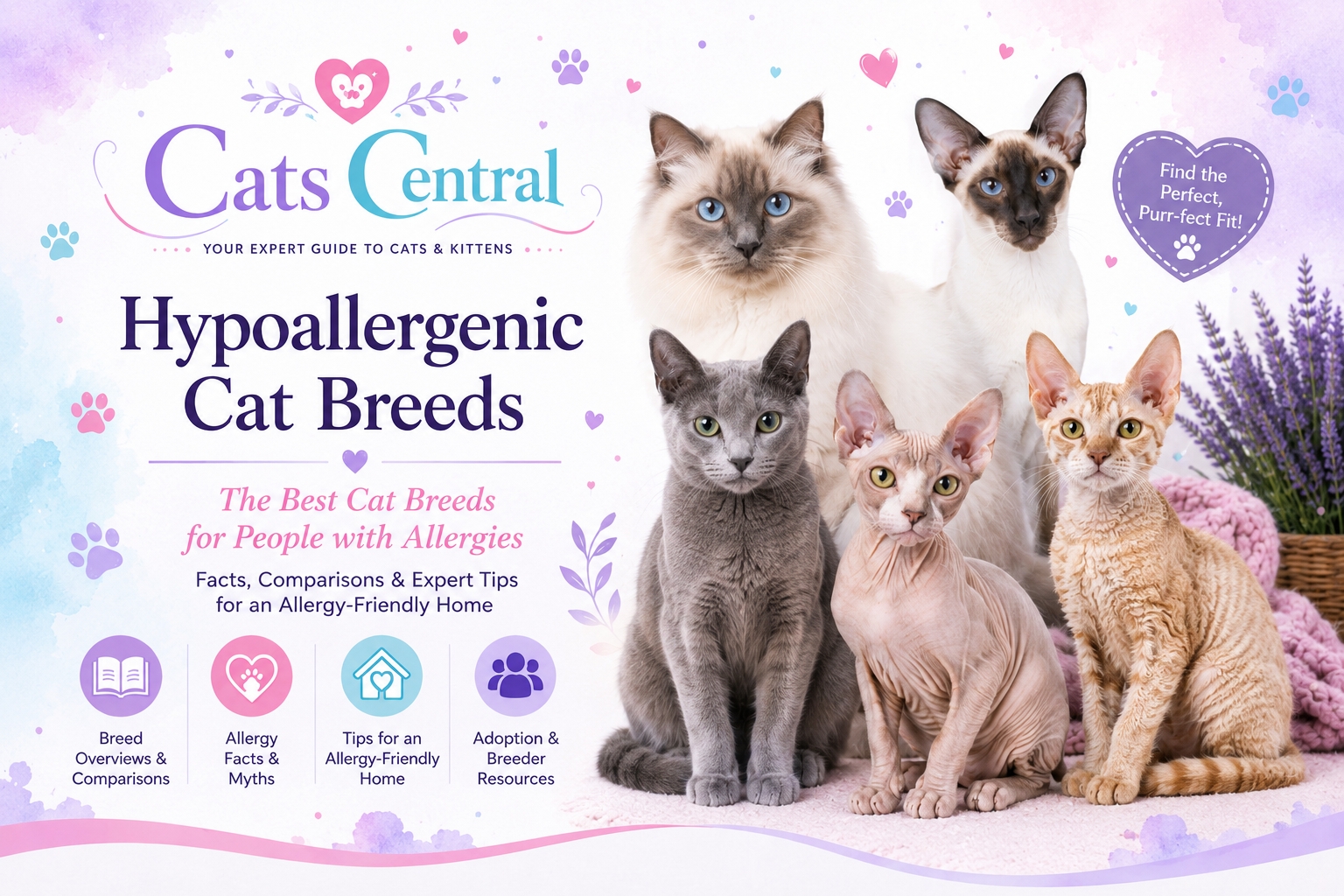
If you love cats but start sneezing, itching, wheezing, or reaching for tissues whenever one comes near, the phrase hypoallergenic cat breeds sounds almost too good to be true.
That is because, medically speaking, it is.
No cat breed is completely hypoallergenic or allergen-free. All cats produce allergenic proteins, and the amount produced can vary considerably from one individual cat to another. However, some breeds are repeatedly described as easier for some allergy-sensitive people to live with, and certain breeds have attracted scientific interest because individual cats may produce comparatively low levels of the major cat allergen, Fel d 1.
The practical goal, therefore, is not to find a mythical allergy-proof cat. It is to understand what causes cat allergies, identify breeds and individual cats that may be worth considering, and make a careful decision based on your own reaction.
Important: If cat exposure causes asthma symptoms, breathing difficulty, significant swelling, or other serious reactions, talk with an allergist before bringing a cat into your home. This guide is educational and is not a substitute for personal medical advice.
On This Page
- Quick Answer: Are Any Cats Really Hypoallergenic?
- What Causes Cat Allergies?
- Hypoallergenic Cat Breeds Comparison
- 1. Siberian
- 2. Balinese
- 3. Russian Blue
- 4. Bengal
- 5. Devon Rex
- 6. Cornish Rex
- 7. Sphynx
- 8. Oriental Shorthair
- 9. LaPerm
- 10. Javanese-Type Cats
- Why Breed Is Not a Guarantee
- How to Choose a Cat When You Have Allergies
- Ways to Reduce Cat Allergen Exposure at Home
- Are Hairless Cats Hypoallergenic?
- Does Hair Length Matter?
- Rescue, Adoption or a Responsible Breeder?
- Frequently Asked Questions
- Related Cats Central Guides
- Sources and Further Reading
Quick Answer: Are Any Cats Really Hypoallergenic?
No. There is no scientifically established cat breed that can be guaranteed not to trigger allergies.
The American College of Allergy, Asthma & Immunology states that all cats produce allergens and that studies have not demonstrated a truly hypoallergenic cat. The American Academy of Allergy, Asthma & Immunology similarly notes that Fel d 1 production may vary, but there is wide variation among individual cats and no truly allergen-free breed.
That does not mean every allergic person reacts equally to every cat. Some individuals report tolerating certain cats or breeds better than others. Research also shows that Fel d 1 production can vary substantially among individual cats.
The safest way to interpret the word hypoallergenic is therefore:
A cat that may be better tolerated by some allergy-sensitive people, but is not allergy-proof.
What Causes Cat Allergies?
Contrary to a common belief, cat hair itself is not usually the primary problem.
Cats produce several allergenic proteins. The best known is Fel d 1, the major cat allergen. It is associated with secretions from salivary and skin glands. When a cat grooms, allergen-containing saliva is spread over the coat and skin. Tiny particles can then become airborne or settle onto furniture, carpets, clothing, bedding, and other surfaces.
That helps explain why a person can react to a room where a cat has been even when the cat is no longer present.
Common Cat Allergy Symptoms
- Sneezing
- Runny or stuffy nose
- Itchy, watery, or red eyes
- Coughing
- Chest tightness
- Wheezing or shortness of breath
- Skin irritation, rash, or hives
Symptoms can range from mild to serious. If you suspect a cat allergy, an allergist can help determine whether cats, pollen, dust, or another environmental exposure is responsible.
Fel d 1 Is Important, But It Is Not the Only Cat Allergen
Fel d 1 receives most of the attention because it is a major cat allergen, but cats produce multiple proteins capable of triggering allergic reactions. This is another reason that simply finding a cat with comparatively low Fel d 1 does not guarantee that a particular person will have no symptoms.
Hypoallergenic Cat Breeds Comparison
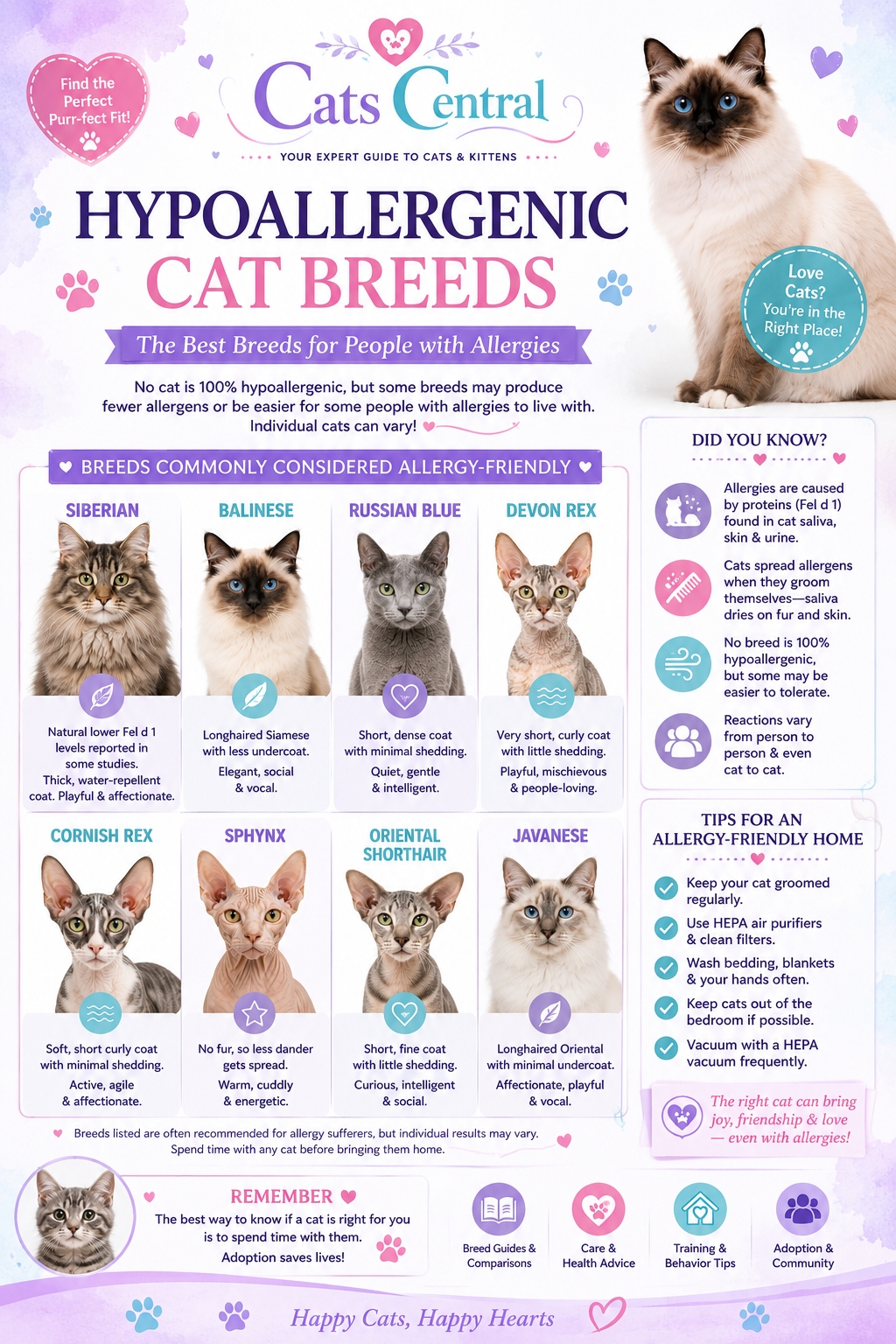
The breeds below are among those most commonly described as allergy-friendly. Think of this list as a starting point for research, not a medical guarantee.
| Breed | Coat | Why It Is Often Suggested | Important Reality Check |
|---|---|---|---|
| Siberian | Long, dense | Some individual Siberians have shown low Fel d 1 levels in research | Levels vary among individual cats |
| Balinese | Fine, semi-long | Frequently included on lower-allergen breed lists | Strong breed-wide clinical evidence is limited |
| Russian Blue | Short, dense | Often reported as better tolerated by some allergy-sensitive owners | Not proven to be hypoallergenic as a breed |
| Bengal | Short, sleek | Frequently suggested because of its close, low-maintenance coat | Coat type alone does not determine allergen production |
| Devon Rex | Short, wavy | Light, curly coat and relatively low shedding | Still produces Fel d 1 and other allergens |
| Cornish Rex | Very short, wavy | Fine coat and reduced loose hair compared with many cats | Reduced hair does not equal reduced allergen production |
| Sphynx | Hairless or nearly hairless | No typical fur coat to shed around the home | Allergens remain on skin and in saliva |
| Oriental Shorthair | Very short, close | Frequently named on allergy-friendly breed lists | No guarantee of reduced allergen production |
| LaPerm | Curly, variable length | Curly coat and variable shedding | Still produces normal cat allergens |
| Javanese-type | Fine, medium length | Frequently included in traditional hypoallergenic-breed lists | Registry naming differs and evidence remains limited |
1. Siberian
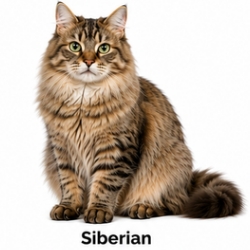
The Siberian is probably the breed most strongly associated with the phrase “hypoallergenic cat.” That reputation is particularly interesting because Siberians have abundant, weather-resistant coats rather than the sparse coats people often expect from an allergy-friendly breed.
Researchers have examined Fel d 1 production and genetic variation in Siberian cats. Some individual Siberians have shown comparatively low Fel d 1 measurements, and genetic studies have identified variation in genes associated with the allergen.
That is intriguing, but it is not enough to say that every Siberian is low-allergen. Individual variation remains important, and a person who tolerates one Siberian may react to another.
Siberian Personality and Care
Siberians are generally active, intelligent, athletic, and people-oriented. Their substantial coat needs regular grooming, especially during seasonal shedding periods.
If allergies are a concern, arrange meaningful exposure to the actual cat or breeding line before making a commitment rather than relying on the breed name alone.
Best takeaway: The Siberian deserves serious consideration for allergy-sensitive cat lovers, but not a guarantee.
2. Balinese
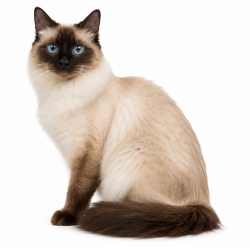 The Balinese is a longhaired relative of the Siamese, with a fine, silky coat, blue eyes, and an intensely social personality.
Balinese cats are frequently described online and by breed enthusiasts as producing less Fel d 1 than average. However, strong evidence establishing the entire breed as reliably low-allergen is limited.
That distinction matters. A Balinese may be worth meeting if you are searching for a breed sometimes reported to be easier to tolerate, but the individual cat should be the deciding factor.
Balinese Personality and Care
Expect an intelligent, vocal, highly interactive companion. Balinese cats usually want to participate in household life and can become bored when left without enough companionship or enrichment.
The coat is generally easier to maintain than its length might suggest, but regular brushing is still helpful.
3. Russian Blue
The 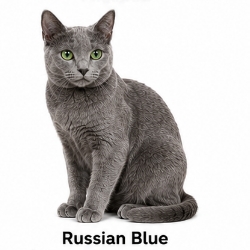 elegant Russian Blue is frequently included on lists of hypoallergenic cat breeds. These cats have plush silver-blue coats, vivid green eyes, and a reputation for being intelligent, observant, and somewhat reserved with unfamiliar people.
You may encounter claims that Russian Blues naturally produce less Fel d 1. Those claims should be treated cautiously. Current allergy guidance emphasizes substantial variation among individual cats and does not recognize the Russian Blue, or any other breed, as reliably hypoallergenic.
Still, some allergy-sensitive people report doing well with individual Russian Blues, making the breed one worth investigating on a cat-by-cat basis.
Russian Blue Personality and Care
Russian Blues often appreciate predictable routines and can be affectionate and playful with people they trust. Their dense double coat benefits from routine brushing, especially when shedding.
4. Bengal
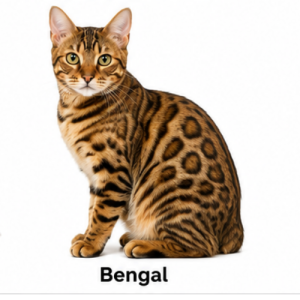 The Bengal is a striking, athletic cat with a sleek spotted or marbled coat. Bengals are frequently suggested for allergy-sensitive homes because their coats are short, close-lying, and relatively easy to maintain.
However, less loose hair does not automatically mean less allergen. Fel d 1 is not simply a substance contained in fur, so coat texture alone cannot establish whether a Bengal will cause fewer symptoms.
If you are considering a Bengal because of allergies, focus on your reaction to the specific cat rather than assuming the breed is safe.
Bengal Personality and Care
Bengals tend to be highly active, intelligent, curious, and demanding of enrichment. This is not usually the best choice for someone seeking a quiet decorative lap cat. Provide climbing opportunities, interactive play, puzzle feeding, and daily engagement.
5. Devon Rex
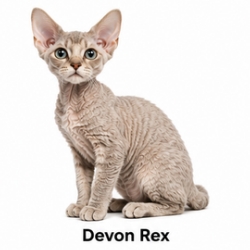 The Devon Rex has a soft, short, wavy coat and a distinctive appearance dominated by large ears and an expressive face.
Because Devon Rex cats have relatively little coat compared with many breeds, they are often promoted as a good choice for people with allergies. They may leave less loose hair around the home, but they still produce allergens in saliva and skin secretions.
A Devon Rex should therefore be considered potentially easier for some individuals to live with, not medically hypoallergenic.
Devon Rex Personality and Care
Devons are typically playful, mischievous, affectionate, and people-focused. Their coat and skin need gentle care because excessive brushing or bathing can irritate the skin.
6. Cornish Rex
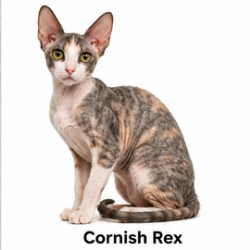 The Cornish Rex has an unusually fine, wavy coat and a lean, athletic build. Like the Devon Rex, it is commonly included on allergy-friendly cat lists because there is less conventional fur to shed.
Again, less hair is not the same thing as no allergen. Cornish Rex cats still produce Fel d 1 and other cat allergens.
Cornish Rex Personality and Care
Cornish Rex cats are energetic, playful, social, and often delightfully clownish. Their fine coats offer less insulation than those of many cats, so they usually appreciate a warm indoor environment.
Skin and coat care should be gentle. Avoid assuming frequent bathing is automatically beneficial; individual cats differ, and excessive washing can cause skin problems.
7. Sphynx
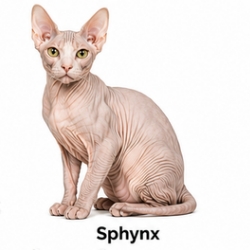
The Sphynx seems like the obvious answer to cat allergies: no fur, no allergy problem. Unfortunately, biology is not that cooperative.
Sphynx cats still produce Fel d 1 and other allergens. Without a typical coat, skin oils and allergenic proteins remain on the skin and can transfer to clothing, bedding, furniture, and people.
Some allergy-sensitive people may find individual Sphynx cats easier to tolerate, while others react strongly.
Sphynx Personality and Care
Sphynx cats are usually social, affectionate, active, and heat-seeking. Their lack of a conventional coat does not mean low-maintenance care. Skin, ears, nails, and body folds may need regular attention, and the cat must be protected from temperature extremes and excessive sun exposure.
Bottom line: Hairless does not mean allergen-free.
8. Oriental Shorthair
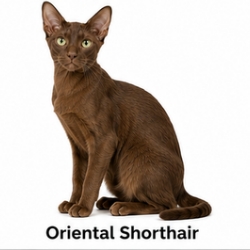 The Oriental Shorthair is closely related to the Siamese and comes in an enormous variety of colors and patterns. Its coat is short, fine, and close to the body.
Oriental Shorthairs are often included in lists of breeds said to be better for allergy-sensitive households. As with the Balinese and Russian Blue, the reputation is stronger than the breed-wide clinical evidence.
Oriental Shorthair Personality and Care
These cats tend to be intelligent, vocal, affectionate, and socially demanding. They usually do best in homes where they receive regular interaction and mental stimulation.
The short coat is easy to maintain, but easy grooming should not be confused with low allergen production.
9. LaPerm
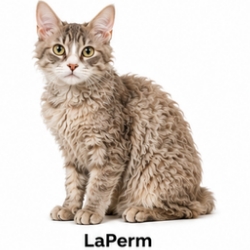 The LaPerm is recognized for its distinctive curly or wavy coat. Individual coats can vary considerably in texture and length.
The breed sometimes appears on hypoallergenic cat lists because the curly coat may shed differently from a conventional straight coat. There is not enough evidence to promise that LaPerm cats consistently produce less allergen.
LaPerm Personality and Care
LaPerms are generally affectionate, curious, and people-friendly. Coat care depends on the individual cat, but gentle combing usually helps prevent tangles without disrupting the curls.
If allergies are a concern, meet the individual cat repeatedly before making your decision.
10. Javanese-Type Cats
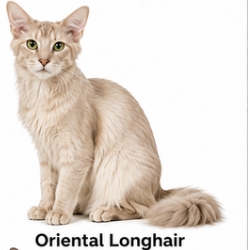 “Javanese” is a name that has been used differently by cat registries and breed organizations, often in connection with longhaired Oriental or Colorpoint-type cats. These elegant cats are frequently included in traditional lists of hypoallergenic breeds.
As with several breeds on this list, the claim that Javanese-type cats consistently produce less Fel d 1 is not firmly established across the breed.
They are typically intelligent, vocal, athletic, affectionate cats that thrive on human companionship.
If you are specifically looking for a Javanese, ask breeders which registry terminology they use so you understand exactly which breed or variety is being discussed.
Why Breed Is Not a Guarantee
One of the most useful findings in cat-allergen research is that individual variation matters.
A study of domestic shorthair cats found substantial differences in salivary Fel d 1 levels among cats, and levels could also vary within the same cat over time. That means a low-producing individual cat can exist outside any breed marketed as hypoallergenic, while a cat from a supposedly allergy-friendly breed may still trigger substantial symptoms.
This is why choosing strictly from a “hypoallergenic breeds” list can be misleading.
Factors That May Matter More Than the Breed Label
- Your personal sensitivity and which cat allergens trigger your symptoms
- The individual cat’s allergen production
- The amount of time you spend around the cat
- Whether the cat enters your bedroom
- The number of cats in the home
- Ventilation and cleaning practices
- Carpets, upholstery, bedding, and other surfaces that collect allergens
- Whether asthma is part of your allergic response
How to Choose a Cat When You Have Allergies
If your allergy is mild enough that you and your healthcare professional believe cat ownership is reasonable, choose carefully.
- Confirm that cats are actually the problem. Allergy testing can help distinguish cat allergy from reactions to pollen, dust mites, mold, or other environmental triggers.
- Research breeds, but do not stop there. Use breed reputation only as a starting point.
- Spend time with the actual cat. A brief five-minute visit may not tell you enough. When practical and medically appropriate, arrange more than one visit.
- Meet adult cats if possible. Your reaction to an adult cat may be more informative than assumptions based on a very young kitten.
- Be honest with the rescue or breeder. Explain that allergy compatibility is an important part of the decision.
- Ask about a trial or foster arrangement when appropriate. Some rescues may be able to discuss foster-to-adopt or other options, although policies vary.
- Have a management plan before the cat arrives. Decide which rooms will be cat-free and how you will manage cleaning and filtration.
Do Not “Test” a Severe Allergy on Your Own
If previous cat exposure has caused asthma attacks, breathing difficulty, or other significant symptoms, do not deliberately expose yourself to cats simply to see what happens. Speak with an allergist about an appropriate evaluation and management plan.
Ways to Reduce Cat Allergen Exposure at Home
No housekeeping routine can turn a cat into an allergen-free pet, but reducing exposure may help some households.
Keep the Bedroom Cat-Free
Because you spend many hours sleeping, keeping the cat out of the bedroom can reduce direct exposure in one important part of the home. Remember, however, that allergens can travel on clothing and through the environment, so a closed bedroom is not an allergen-proof bubble.
Use HEPA Filtration
The American College of Allergy, Asthma & Immunology notes that continuously running high-efficiency particulate air cleaners in commonly used rooms may reduce allergen levels over time.
Vacuum Regularly
A high-efficiency vacuum or central vacuum system can help reduce settled allergen. Upholstery, carpets, cat beds, and other soft surfaces deserve particular attention.
Wash Hands After Handling the Cat
If petting the cat triggers symptoms, washing your hands with soap and water after contact may reduce transfer to your eyes, nose, and face.
Wash Bedding and Soft Furnishings
Washable cat blankets, bedding, and throws are easier to keep clean than surfaces that cannot be laundered.
Discuss Grooming and Bathing With Your Veterinarian
Allergy organizations note that bathing can temporarily reduce airborne allergen, but bathing frequency should also be appropriate for the cat’s skin and coat. Hairless, curly-coated, and conventional-coated breeds have different grooming needs. Your cat’s welfare comes first.
Talk With an Allergist About Treatment
Depending on the person and symptoms, treatment may include medications or allergen immunotherapy. An allergist can provide guidance based on your medical history rather than a generic internet checklist.
Are Hairless Cats Hypoallergenic?
No.
Sphynx and other hairless or nearly hairless cats still produce allergenic proteins. They groom, produce saliva, shed skin cells, and have normal skin secretions.
What changes is the way those substances are distributed. With little or no fur to hold oils and debris, material can accumulate directly on the skin and transfer onto surfaces.
Some allergy sufferers may tolerate a particular hairless cat better than a particular furry cat. Others may not. The absence of hair should never be treated as proof of low allergen production.
Does Hair Length Matter?
Not in the simple way many people assume.
A longhaired cat is not automatically more allergenic, and a shorthaired cat is not automatically safer. Major allergy organizations specifically caution that coat length is not a reliable measure of how much cat allergen will be present.
This explains one of the apparent contradictions on hypoallergenic-breed lists: the longhaired Siberian and Balinese frequently appear beside nearly hairless breeds such as the Sphynx and very short-coated Rex cats.
The important issue is allergenic protein exposure, not the visual amount of fur.
Longhaired Cats | Shorthaired Cats
Rescue, Adoption or a Responsible Breeder?
An allergy-sensitive person does not necessarily need to buy a pedigreed kitten.
Adoption and Rescue
Adult rescue cats may actually provide one useful advantage: you can meet the individual cat whose mature coat, grooming habits, and allergen production you will be living with.
Breed-specific rescues may occasionally have Siberians, Russian Blues, Rex cats, Bengals, Sphynx cats, or other pedigreed and breed-type cats available.
Explore Cat Rescue, Rehoming and Adoption
Choosing a Responsible Breeder
If you decide on a pedigreed kitten, choose a breeder based on health, welfare, transparency, and responsible breeding practices—not solely on promises that the kittens are hypoallergenic.
Be cautious about absolute claims such as:
- “Guaranteed allergy-free”
- “Produces no Fel d 1”
- “Safe for everyone with cat allergies”
A responsible breeder should be comfortable discussing the limits of the hypoallergenic label and allowing prospective families to make an informed decision.
Learn About Finding Responsible Cat Breeders
Frequently Asked Questions About Hypoallergenic Cat Breeds
Are there truly hypoallergenic cat breeds?
No cat breed is completely hypoallergenic or allergen-free. All cats produce allergens, including Fel d 1. Individual cats can differ substantially, however, so some people tolerate certain cats better than others.
What cat breeds are commonly described as hypoallergenic?
Frequently mentioned breeds include the Siberian, Balinese, Russian Blue, Bengal, Devon Rex, Cornish Rex, Sphynx, Oriental Shorthair, LaPerm, and Javanese-type cats.
Which cat is the most hypoallergenic?
There is no scientifically established single “most hypoallergenic” breed. Siberians receive particular attention because some individual cats have shown comparatively low Fel d 1 measurements, but this does not apply uniformly to every Siberian.
How hypoallergenic are Siberian cats?
Some Siberians may produce relatively low levels of Fel d 1, and researchers have investigated genetic variation associated with the allergen. Other Siberians can produce higher levels. A Siberian should therefore be evaluated as an individual cat rather than assumed to be hypoallergenic.
Are Himalayan cats hypoallergenic?
Himalayan cats are not considered allergen-free, and their long coats do not determine whether they will trigger an allergic person. They produce the same types of cat allergens as other domestic cats.
Are Sphynx cats hypoallergenic?
No. Sphynx cats produce Fel d 1 and other allergens despite having little or no conventional fur.
Are Russian Blue cats hypoallergenic?
Russian Blues are commonly described as allergy-friendly, but the breed is not scientifically proven to be hypoallergenic. Individual tolerance varies.
Are Bengal cats hypoallergenic?
Bengals are often included on allergy-friendly cat lists, but they still produce cat allergens. Their sleek coat does not guarantee reduced symptoms.
Does a short-haired cat cause fewer allergies than a long-haired cat?
Not necessarily. Cat allergies involve proteins in saliva, skin secretions, dander, and other material rather than hair length itself.
Can I tell whether a kitten is hypoallergenic?
There is no simple visual test that can tell you a kitten will be safe for a particular allergy sufferer. If allergies are an important concern, discuss them with an allergist and spend time with the individual cat or breeding household when medically appropriate.
Can HEPA filters help with cat allergies?
HEPA filtration may help reduce airborne allergens as part of a broader exposure-reduction strategy, but it cannot make a cat household completely allergen-free.
Can someone with asthma own a cat?
That decision should be made with medical guidance. Cat allergens can trigger asthma in sensitized people, and deliberately bringing a cat into the home can be risky for someone with significant respiratory reactions.
Related Cats Central Guides
- Cat Breeds and Types
- Siberian Cats
- Balinese Cats
- Russian Blue Cats
- Bengal Cats
- Devon Rex Cats
- Cornish Rex Cats
- Sphynx Cats
- Oriental Shorthair Cats
- LaPerm Cats
- Hairless Cats
- Curly-Coated Cats
- Longhaired Cats
- Shorthaired Cats
- Cat Rescue, Rehoming and Adoption
- Cat Breeders
The Bottom Line
If you are searching for hypoallergenic cat breeds, the most important fact to remember is that the perfect allergy-proof cat does not exist.
Siberians, Balinese, Russian Blues, Bengals, Rex breeds, Sphynx cats, Oriental Shorthairs, LaPerms, and other breeds may be worth investigating because some allergy-sensitive people report better tolerance and because individual cats can differ greatly in allergen production.
But the individual cat matters enormously.
Start with accurate allergy testing when needed, research the breed for all of its characteristics—not just allergy claims—and spend time with the actual cat before making a lifelong commitment when it is medically safe to do so.
The best cat for an allergy-sensitive household is not the cat with the strongest “hypoallergenic” marketing. It is a healthy, well-matched individual cat whose presence can be managed safely and comfortably by everyone in the home.
Sources and Further Reading
- American College of Allergy, Asthma & Immunology: Pet Allergies
- American Academy of Allergy, Asthma & Immunology: Management of Cat and Dog Allergy
- Bonnet B, et al. An Update on Molecular Cat Allergens: Fel d 1 and What Else?
- Bastien BC, et al. Influence of Time and Phenotype on Salivary Fel d 1 in Domestic Shorthair Cats
- Sartore S, et al. Polymorphism Analysis of Ch1 and Ch2 Genes in the Siberian Cat
- Satorina J, et al. Do Hypoallergenic Cats Exist? Determination of Major Cat Allergen Fel d 1 Production
Medical note: Cats Central provides general educational information. People with suspected or diagnosed cat allergy, asthma, or significant reactions should seek personalized guidance from a qualified healthcare professional.
Last reviewed: August 2026